
For small business owners, entrepreneurs, and investors, managing your finances effectively is just as critical as your core operations. A key component of this financial management is understanding and maximizing your tax write-offs. Navigating the world of small business tax deductions can seem daunting, but overlooking them means leaving significant money on the table-money that could be reinvested into growth, used to upgrade equipment, or simply improve your cash flow. These deductions are not loopholes; they are legitimate, government-approved incentives designed to help businesses thrive by lowering their taxable income.
This comprehensive guide is designed to demystify the process. We will break down the most essential and often underutilized tax deductions available to you. Forget dense tax code and confusing jargon. Instead, you’ll find a straightforward roundup of key deductions, complete with eligibility criteria, practical examples, and actionable tips for claiming them correctly. From your home office and vehicle expenses to professional development and marketing costs, this article provides the clear insights you need. By the end, you will have a strategic roadmap to confidently reduce your tax burden for the 2025 tax year and beyond, ensuring you keep more of your hard-earned revenue.
1. Home Office Deduction
If you run your small business from your home, the home office deduction is one of the most valuable small business tax deductions you can claim. This deduction allows you to write off a portion of your home’s expenses, such as mortgage interest, insurance, utilities, and repairs, against your business income. To qualify, you must use a specific area of your home regularly and exclusively for your trade or business.

The IRS provides two methods for calculating this deduction, giving you the flexibility to choose the one that offers the greater tax savings for your specific situation.
### How to Calculate the Deduction
You have two options for determining your deduction amount:
- The Simplified Method: This is the easiest way to claim the deduction. You can deduct $5 per square foot for the part of your home used for business, up to a maximum of 300 square feet. This caps the deduction at $1,500 per year. It’s an excellent choice for those who prefer minimal record-keeping.
- The Actual Expense Method: This method requires more detailed tracking but can result in a larger deduction. You calculate the percentage of your home used for business (e.g., a 150-square-foot office in a 1,500-square-foot home is 10%). You then apply that percentage to your total home expenses, including rent, mortgage interest, property taxes, utilities, insurance, and repairs.
### Actionable Tips for Claiming
To maximize this deduction and stay compliant, follow these best practices:
- Document Your Space: Take photos and measurements of your dedicated office area annually as proof of its exclusive business use.
- Keep Meticulous Records: If using the actual expense method, maintain a detailed file of all utility bills, repair receipts, and insurance statements throughout the year.
- Choose Wisely: Compare both the simplified and actual expense methods each year. The best option may change depending on your expenses. For an in-depth analysis of the tax implications, you can explore the various home office deductions you can claim. Learn more about the tax implications of working from home on alliedtax.com.
2. Business Vehicle Expenses
For small business owners who use a vehicle for business activities, deducting vehicle-related costs is one of the most significant small business tax deductions available. This deduction allows you to write off the expenses associated with using your car, truck, or van for business purposes, such as driving to client meetings, making deliveries, or traveling between job sites. To qualify, the travel must be for your specific trade or business, not your daily commute.

The IRS offers two distinct methods for calculating this deduction. This flexibility allows you to select the approach that provides the most substantial tax benefit based on your vehicle usage and expenses each year.
### How to Calculate the Deduction
You can choose one of two options to figure out your deduction amount:
- The Standard Mileage Rate: This is the most straightforward method. You simply multiply your total business miles driven by the standard rate set by the IRS. For 2023, the rate is 65.5 cents per mile. This method is ideal for those who want to minimize record-keeping, as it covers depreciation, gas, and maintenance in one simple calculation.
- The Actual Expense Method: While requiring more detailed records, this method can lead to a larger deduction. You track and add up all your actual vehicle costs, including gas, oil changes, insurance, registration fees, repairs, tires, and depreciation. You then determine the percentage of business use (e.g., 10,000 business miles out of 15,000 total miles is 66.7%) and apply that percentage to your total costs.
### Actionable Tips for Claiming
To properly claim this deduction and ensure you are IRS-compliant, follow these tips:
- Maintain a Contemporaneous Log: Use a mileage tracking app or keep a detailed physical logbook in your vehicle. For each trip, record the date, mileage, destination, and business purpose.
- Keep All Receipts: If you think you might use the actual expense method, save every receipt related to your vehicle, including gas, oil changes, insurance payments, and major repairs.
- Calculate Both Ways: Run the numbers for both the standard mileage and actual expense methods at the end of the year. Your driving habits and vehicle costs can change, so the better option may vary annually.
- Document Odometer Readings: Record your vehicle’s odometer reading on the first and last day of the year. This helps establish your total mileage, which is necessary for both deduction methods.
3. Equipment and Supply Deductions
One of the most fundamental small business tax deductions involves writing off the cost of necessary equipment and supplies. These expenses, which are essential for daily operations, can significantly lower your taxable income. This category covers a wide range of items, from office supplies like paper and pens to major investments like machinery, computers, and furniture used in your trade or business.
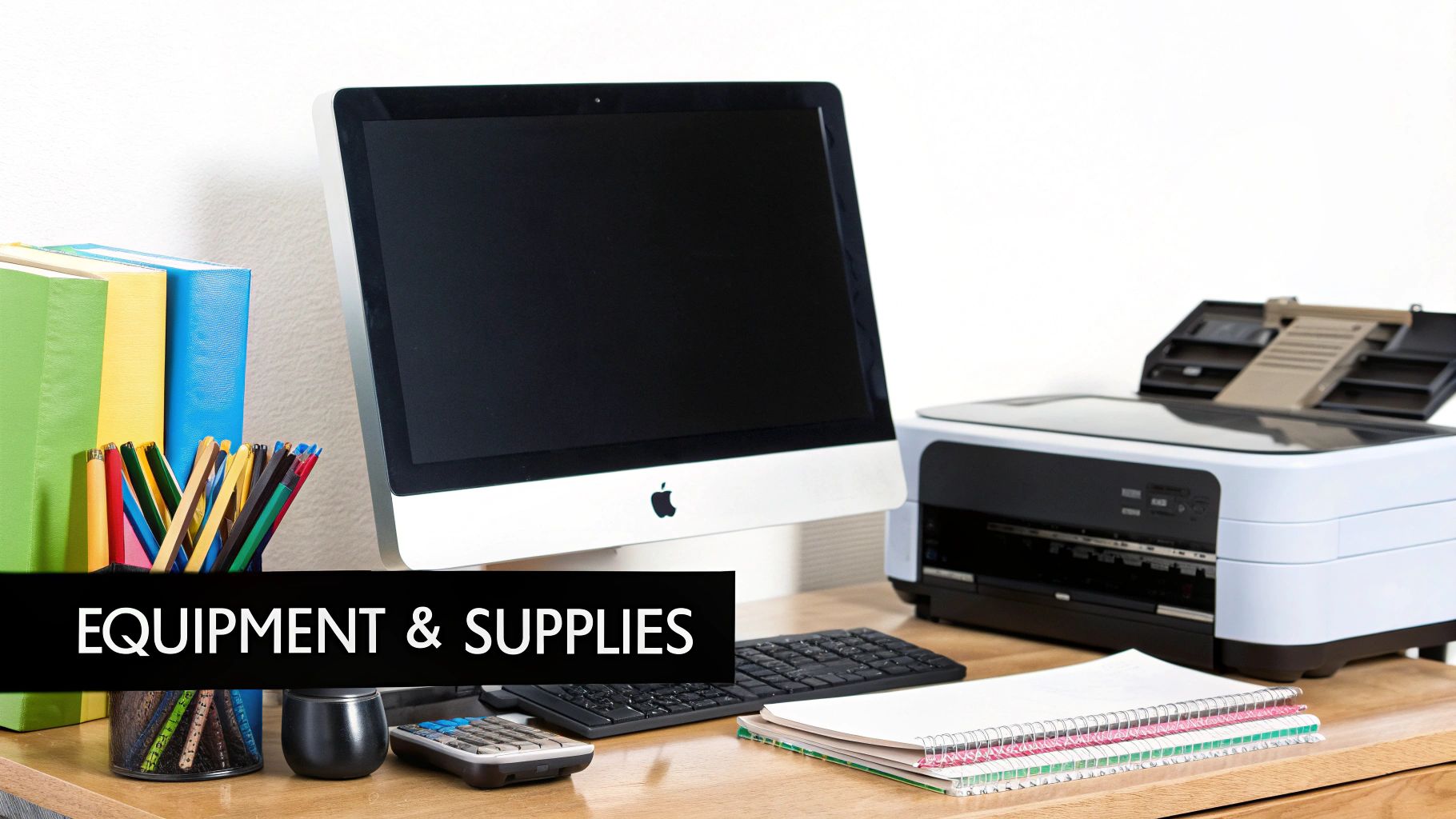
The IRS allows you to deduct the full cost of many of these items in the year you purchase them. For larger equipment purchases, you have several options for how to claim the deduction, providing flexibility in your tax planning strategy.
### How to Calculate the Deduction
The method for deducting these costs depends on the type of item and its expected lifespan:
- Supplies: The cost of materials and supplies consumed within one year, such as printer ink, cleaning products, or food ingredients for a restaurant, can generally be deducted in full in the year they are purchased.
- Equipment (Section 179 & Bonus Depreciation): For larger, qualifying equipment purchases like vehicles, machinery, and software, you can often deduct the entire cost in the year of purchase using Section 179 expensing or bonus depreciation. This is a powerful tool for accelerating your tax savings instead of depreciating the asset over several years. For instance, a law firm buying $15,000 worth of new computers and office furniture could potentially deduct the full $15,000 from its business income.
### Actionable Tips for Claiming
To properly claim these deductions and optimize your tax position, consider these practices:
- Keep All Invoices: Meticulously save every receipt and invoice for equipment and supply purchases to substantiate your claims in case of an audit.
- Maintain an Asset Register: For significant equipment purchases, create and maintain an asset register. This document should list the item, purchase date, cost, and how it was deducted (e.g., Section 179).
- Time Your Purchases: Consider making necessary equipment or supply purchases before the end of the year to reduce your current year’s tax liability. Strategic timing is a key part of effective tax planning.
- Understand Capitalization Rules: Familiarize yourself with the difference between a deductible supply and a capital asset that must be depreciated. Generally, items with a useful life of more than one year are considered capital assets.
4. Professional Development and Training
Investing in your skills is investing in your business, and the IRS agrees. The cost of professional development and training is a powerful small business tax deduction that allows you to write off expenses for education that maintains or improves the skills required for your current trade or business. This can include courses, seminars, certifications, and even subscriptions to industry publications.
To qualify, the education must be directly related to your existing business. For instance, a marketing consultant taking a digital analytics workshop or a restaurant owner attending a food safety course are clear examples. The key is that the training enhances your expertise in your current field, rather than preparing you for a new one.
### How to Qualify for the Deduction
You can deduct the costs of qualifying work-related education. The expenses must be for training that:
- Maintains or improves skills needed in your present work. This keeps you up-to-date with the latest trends, technologies, and best practices in your industry.
- Is required by law or regulations to keep your professional status, license, or job. A common example is the continuing education required for CPAs, lawyers, or real estate agents to maintain their licenses.
You cannot deduct expenses for education that is needed to meet the minimum educational requirements for your trade or that qualifies you for a new trade or business.
### Actionable Tips for Claiming
To properly claim this deduction and ensure compliance, follow these tips:
- Document the Connection: Keep detailed notes or a memo explaining how each educational activity directly relates to and benefits your current business operations.
- Retain All Receipts: Save every receipt related to the training, including course fees, required books, supplies, and any associated travel or lodging costs.
- Keep Proof of Completion: Store certificates of completion, course outlines, and transcripts as evidence that you attended and completed the training.
- Plan for Tax Timing: Consider scheduling significant educational investments before the end of the tax year to accelerate your deductions and reduce your current-year tax liability.
5. Business Meals and Entertainment
Deducting the cost of business-related meals is a common and valuable way to lower your taxable income, making it one of the most practical small business tax deductions. Generally, you can deduct 50% of the cost of meals with clients, employees, or business partners, provided the meal has a clear business purpose. While the Tax Cuts and Jobs Act eliminated deductions for entertainment expenses, the deduction for business meals was retained under specific conditions.

To qualify, the meal cannot be lavish or extravagant, and the business owner or an employee must be present. The primary purpose of the meal must be to conduct business, such as discussing a proposal, closing a deal, or fostering a client relationship.
### What Qualifies as a Deductible Meal?
For a meal to be deductible, it must meet specific IRS criteria. Here are some clear examples:
- Taking a potential client to lunch to discuss a new project or business proposal.
- Providing meals for employees who are required to work late to meet a deadline.
- Catering a training session or a business meeting for your team at the office.
- Meals consumed while attending an out-of-town business conference or seminar.
### Actionable Tips for Claiming
Proper documentation is crucial for this deduction. Follow these tips to ensure you stay compliant:
- Document Everything: For each meal, record the date, location, cost, the business purpose of the discussion, and the names and business relationships of everyone who attended.
- Keep Detailed Receipts: Always get an itemized receipt, not just a credit card slip. This proves the expense was for food and beverages and not non-deductible entertainment.
- Separate Entertainment Costs: If an event includes both meals and entertainment, you must pay for them separately. Only the food and beverage portion is eligible for the deduction.
- Stay Informed on Rule Changes: Temporary rules, such as the 100% deduction for meals from restaurants in 2021-2022, can offer significant savings. Always check the current year’s regulations. For more detailed guidance, explore the nuances of what is considered a deductible business meal. Learn more about deducting business meals on alliedtax.com.
6. Marketing and Advertising Expenses
Spreading the word about your business is essential for growth, and the IRS recognizes this by allowing you to deduct all ordinary and necessary marketing costs. These expenses are one of the most common and valuable small business tax deductions because they are 100% deductible in the year they are incurred. This includes everything from digital ad campaigns and website development to printed brochures and promotional events.
To be deductible, an advertising expense must be a reasonable cost directly related to your business activities. For example, a local bakery paying for Facebook and Google ads, a consulting firm developing a professional website, or a retail store printing new business cards all qualify. The key is that the expense is intended to attract customers and generate revenue.
### What Qualifies as a Deductible Expense
A wide range of activities falls under the marketing and advertising umbrella. You can deduct costs for:
- Digital Advertising: This includes payments for Google Ads, social media ads (Facebook, Instagram, LinkedIn), and other online promotional placements.
- Website Costs: Expenses for designing, building, and maintaining your business website are fully deductible. This also covers domain registration and web hosting fees.
- Print and Physical Media: The cost of business cards, brochures, flyers, and ads in newspapers or magazines are all valid deductions.
- Promotional Materials: Expenses for creating branded merchandise like t-shirts, pens, or other “swag” given to customers and prospects are deductible.
### Actionable Tips for Claiming
To ensure you can confidently deduct these expenses and maximize your savings, follow these best practices:
- Keep All Invoices: Maintain meticulous records of all receipts and invoices for your marketing and advertising expenditures, whether digital or physical.
- Track Your Channels: Document the business purpose for each marketing activity. Note which campaigns are running and their intended outcomes to justify the expenses.
- Include Software Costs: Don’t forget to deduct the cost of marketing-related software and tools, such as email marketing platforms, social media schedulers, and analytics software.
7. Professional Services and Fees
The costs of hiring professionals to support your business operations are a critical category of small business tax deductions. Any fees paid to attorneys, accountants, consultants, or other outside professionals for services directly related to your business are generally fully deductible. This deduction recognizes that specialized expertise is often necessary for growth, compliance, and strategic planning.
To qualify, the services must be considered both ordinary and necessary for your industry. This includes fees for legal advice on contracts, accounting services for tax preparation, or hiring a consultant to improve your marketing strategy. These expenses directly reduce your taxable income, lowering your overall tax liability.
### Examples of Deductible Fees
Many common professional services fall under this deduction category:
- Accounting and Tax Services: Fees paid to a CPA or tax professional for bookkeeping, payroll processing, tax preparation, and financial planning.
- Legal Services: Costs for legal advice, contract drafting and review, business formation or dissolution, and assistance with regulatory compliance.
- Consulting Fees: Payments to business, marketing, or IT consultants who provide strategic guidance or specialized project support.
- Professional Memberships: Dues and fees for memberships in professional organizations related to your trade or industry.
### Actionable Tips for Claiming
To ensure you can fully and properly claim these deductions, maintain clear and organized records.
- Keep All Invoices: Retain every invoice, contract, and proof of payment from professional service providers. These documents are your primary evidence.
- Document the Business Purpose: On each invoice or in your records, note the specific business reason for the service. For example, “Legal fees for reviewing new client contract.”
- Separate Business and Personal: If a professional service covers both business and personal matters (e.g., a lawyer who drafts a business contract and a personal will), you must only deduct the portion related to your business.
- Consider Timing: You generally deduct expenses in the year they are paid. Proper timing of these payments can be a useful tool for managing your annual tax burden. For more ideas on managing your expenses, you can explore various tax-saving strategies. Find more tax-saving strategies for small business owners on alliedtax.com.
8. Business Insurance Premiums
Protecting your business from unforeseen events is a crucial operational cost, and thankfully, the premiums you pay for various types of business insurance are considered essential small business tax deductions. The IRS allows you to deduct the ordinary and necessary costs of insurance as a business expense, reducing your taxable income and providing vital financial protection at the same time.
This deduction covers a wide range of policies, including general liability, professional liability (errors and omissions), property insurance for buildings and equipment, business interruption insurance, and state-mandated workers’ compensation. For example, a restaurant can deduct premiums for its general liability and property insurance, while a consultant can write off the cost of their professional liability coverage.
### How to Calculate the Deduction
Calculating the deduction for business insurance is generally straightforward, as the deductible amount is the total premium you paid during the tax year.
- Direct Cost Method: The most common approach is to simply total the amount you paid for all qualifying business insurance policies within the tax year. For instance, if you paid $2,000 for general liability and $1,500 for workers’ compensation, your total deductible amount would be $3,500. You cannot deduct premiums paid for future years; you can only deduct the portion that applies to the current tax year.
### Actionable Tips for Claiming
To ensure you correctly claim this deduction and maximize its benefits, adhere to these practices:
- Keep Meticulous Records: Retain copies of all insurance policy documents, premium invoices, and proof of payment. These documents are essential for substantiating your claims in the event of an audit.
- Separate Business and Personal Policies: Do not mix personal insurance (like your personal auto or homeowner’s policy) with your business policies. Only premiums for coverage directly related to your business operations are deductible.
- Review Coverage Annually: Use your annual insurance renewal as an opportunity to review your coverage. Ensure it’s adequate for your current business risks and shop around to confirm you are getting a cost-effective rate. Document any changes in your business that necessitate new or specialized coverage.
Small Business Tax Deduction Comparison
| Item | Implementation Complexity 🔄 | Resource Requirements ⚡ | Expected Outcomes 📊 | Ideal Use Cases 💡 | Key Advantages ⭐ |
|---|---|---|---|---|---|
| Home Office Deduction | Moderate – requires exclusive use proof | Low to Moderate – record keeping needed | Tax savings from home-related expenses | Small business owners and qualifying employees working at home | Significant tax savings; simplified or actual method |
| Business Vehicle Expenses | Moderate – strict mileage/log maintenance | Moderate – detailed logs and receipts | Deduction on vehicle expenses or mileage | Businesses with vehicle use like delivery or site visits | Choice between mileage or actual costs method; covers many vehicle expenses |
| Equipment and Supply Deductions | Moderate – tracking depreciation/expensing | Moderate – receipts and asset tracking | Immediate or depreciated deductions on purchases | Businesses buying tools, machinery, office supplies | Section 179 allows large immediate expensing; wide range of items |
| Professional Development and Training | Low to Moderate – must document relevance | Low – keep receipts and course materials | Deduction on education maintaining/improving skills | Professionals improving skills related to current business | Encourages skill development; includes travel and materials |
| Business Meals and Entertainment | Low – 50% deduction with documentation | Low – maintain receipts and purpose notes | Partial deduction on meals with business purpose | Client meetings, employee meals, business travel | Helps build relationships; some meals 100% deductible |
| Marketing and Advertising Expenses | Low – straightforward expense tracking | Low to Moderate – keep invoices and documentation | 100% deduction on marketing costs | Businesses advertising via digital, print, or events | Fully deductible; broad coverage including digital marketing |
| Professional Services and Fees | Low – requires proper documentation | Low – store invoices and contracts | Full deduction on fees paid for business services | Hiring lawyers, accountants, consultants, and memberships | Fully deductible; covers many professional service types |
| Business Insurance Premiums | Low – simple expense tracking | Low – keep policy documents and invoices | Full deduction on business insurance premiums | Businesses with liability, property, and workers’ comp needs | Fully deductible; wide coverage types |
From Deductions to Decisions: Building a Tax-Savvy Business
Navigating the landscape of small business tax deductions can feel like assembling a complex puzzle. Each piece, from the home office deduction to business insurance premiums, represents a vital opportunity to reduce your taxable income and retain more of your hard-earned revenue. As we’ve explored, the key isn’t just knowing these deductions exist; it’s understanding how to strategically and accurately apply them to your unique business operations.
This journey from awareness to application is where true financial empowerment begins. You’ve learned that meticulous record-keeping is the non-negotiable foundation for every claim. Whether you’re tracking miles for business vehicle use or saving receipts for professional development courses, documentation transforms a potential deduction into a defensible one. Remember, the IRS requires proof that expenses were both ordinary (common and accepted in your trade) and necessary (helpful and appropriate for your business).
Your Strategic Next Steps
Moving forward, the goal is to shift from a reactive, year-end scramble to a proactive, year-round strategy. The insights gained from this article provide a clear roadmap.
- Conduct a Self-Audit: Review the deductions we’ve covered, like equipment, marketing costs, and professional fees. Which ones are you currently maximizing? Which have you overlooked? Create a personalized checklist based on your business activities to ensure you’re not leaving money on the table.
- Refine Your Record-Keeping System: Your current method might be good, but can it be better? Consider dedicated software or a more organized digital filing system to make tracking expenses seamless. The less friction there is in recording a purchase, the more likely you are to do it consistently.
- Plan Ahead for Major Purchases: Understanding deductions like Section 179 for equipment can influence the timing of your investments. Planning capital expenditures before the end of the tax year can yield significant savings, turning a tax strategy into a powerful business growth tool.
Ultimately, mastering your small business tax deductions is about more than just compliance. It’s a fundamental aspect of sound financial management. Every dollar saved through a legitimate deduction is a dollar you can reinvest into marketing, new technology, or your own professional growth. This proactive approach transforms tax planning from a dreaded chore into a strategic advantage, fueling your business’s stability and potential for expansion. By treating your taxes with the same diligence you apply to your products or services, you build a more resilient and profitable enterprise.
Don’t navigate the complexities of small business tax deductions alone. The experts at Allied Tax Advisors specialize in creating personalized tax strategies that maximize your savings and ensure full compliance. Schedule a consultation today at Allied Tax Advisors to build a tax plan that supports your business’s long-term success.