
An IRS Notice CP2000 is a proposed adjustment, not a bill and not an audit, triggered when third-party income data doesn't match what you reported on your tax return. You generally have 30 days to respond, measured from the date printed on the notice, so treat the deadline as urgent.
You've opened an IRS envelope and found a table comparing your tax return with information from an employer, bank, brokerage, or another reporting institution. The proposed change may look like a demand for payment, but that interpretation leads many taxpayers into the wrong response.
A CP2000 is an early step in the IRS underreporter process. The notice identifies the information the IRS received, explains the proposed changes, and gives you an opportunity to agree, partially agree, or dispute the figures. The IRS specifically says a CP2000 is not a bill and not a formal audit. (IRS guidance on the CP2000 series)
Your job isn't to panic or send money immediately. Your job is to reconcile every line, document the correct tax treatment, and respond before the deadline.
Table of Contents
- What an IRS Notice CP2000 Means
- Common Triggers That Generate a CP2000 Notice
- How to Read and Understand Your CP2000 Notice
- Your Three Response Options and When to Use Each
- How to Dispute a CP2000 Notice Successfully
- Payment Options and Managing Penalties
- When to Bring in a Tax Professional for Help
What an IRS Notice CP2000 Means
You open an IRS envelope and see a proposed tax change based on records from an employer, bank, brokerage, or another payer. The notice can look like a bill, but the procedure matters more than the appearance. A CP2000 starts a response process. It does not settle what you owe.
The notice comes from the IRS Automated Underreporter program, or AUR. The program compares your return with income and payment information submitted by third parties. When the records conflict, the IRS may issue a CP2000 proposing an adjustment. The IRS Internal Revenue Manual explanation of the AUR program describes this process.
A mismatch can reflect omitted income, but it can also result from timing, duplicate reporting, a corrected form, an inaccurate payer record, or a tax calculation that leaves out related deductions or basis. The notice identifies the reporting source, the amount involved, and the proposed effect on your return. The Taxpayer Advocate Service explanation of CP2000 notices explains how taxpayers should evaluate that information.
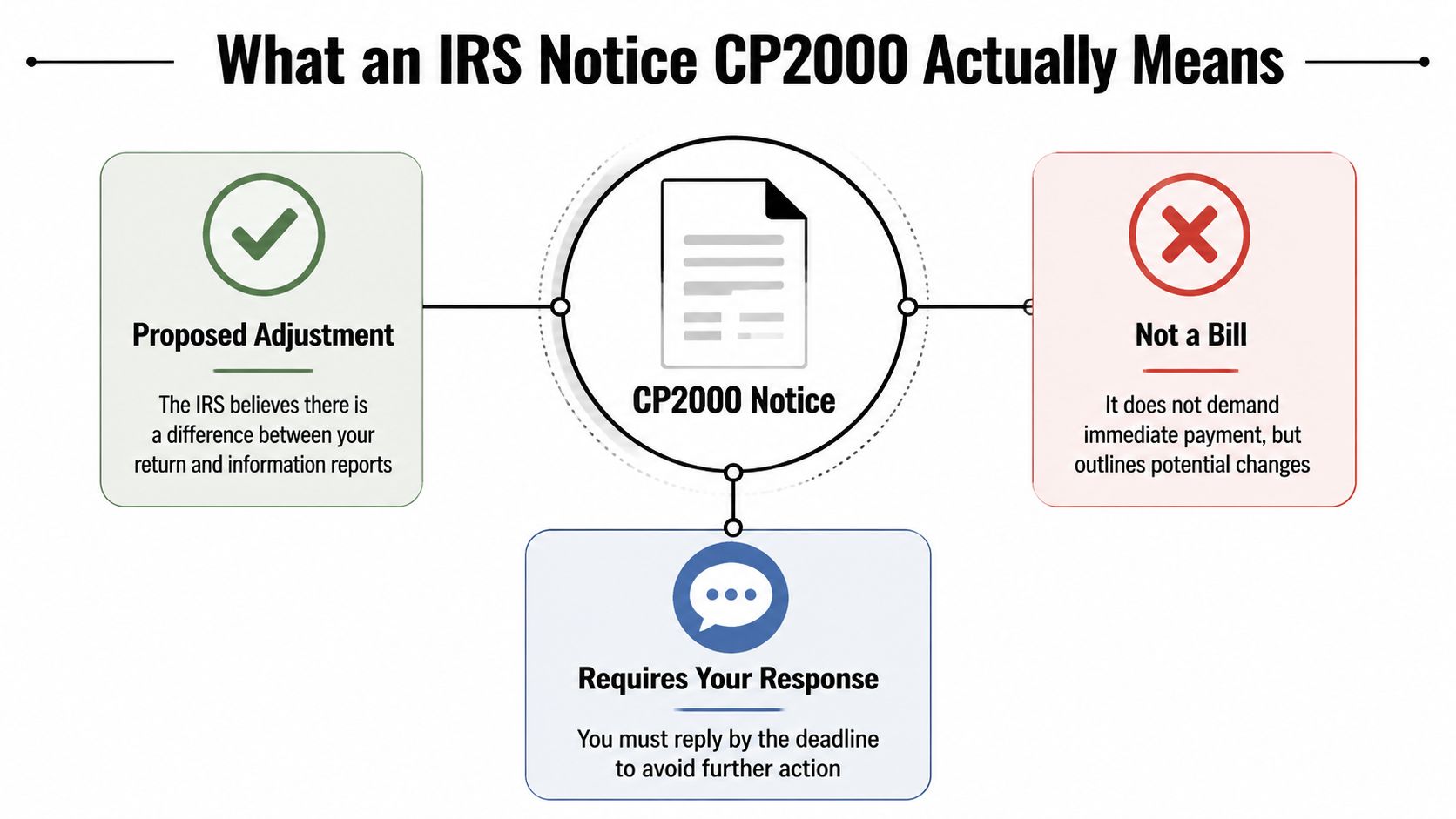
What the notice is, and what it isn't
A CP2000 is a proposal to correct your return. It is not a final determination, formal audit notice, or immediate bill. The IRS may propose changes to income, payments, deductions, or credits. Depending on the records and the correct tax treatment, the result could be additional tax or a refund.
Your response determines what happens next. Agree when the IRS figures are correct. Dispute the proposal when the income was already reported, the payer supplied incorrect information, or related deductions and basis change the calculation. If you agree with only part of the notice, respond to that portion and document the remaining disagreement.
Why the deadline matters
The response period is generally 30 days from the date printed on the notice, not the date you opened it. Jackson Hewitt guidance on responding to a CP2000 also recommends acting promptly. Gather the notice, return, statements, payer correspondence, and calculation records immediately.
Silence is not a safe strategy. If you do not respond, the IRS may treat the proposed adjustment as accepted and issue CP 3219A, a statutory notice of deficiency that creates a further procedural deadline. Respond with a specific position and supporting documents before that escalation occurs.
Practical rule: Treat the CP2000 as a serious proposal, not a final bill. Choose agree, partially agree, or dispute, then respond with evidence on time.
Common Triggers That Generate a CP2000 Notice
Most CP2000 notices begin with an information mismatch, not an accusation that you intentionally concealed income. The notice usually points to the payer or institution that submitted the information, which gives you a starting point for tracing the problem.
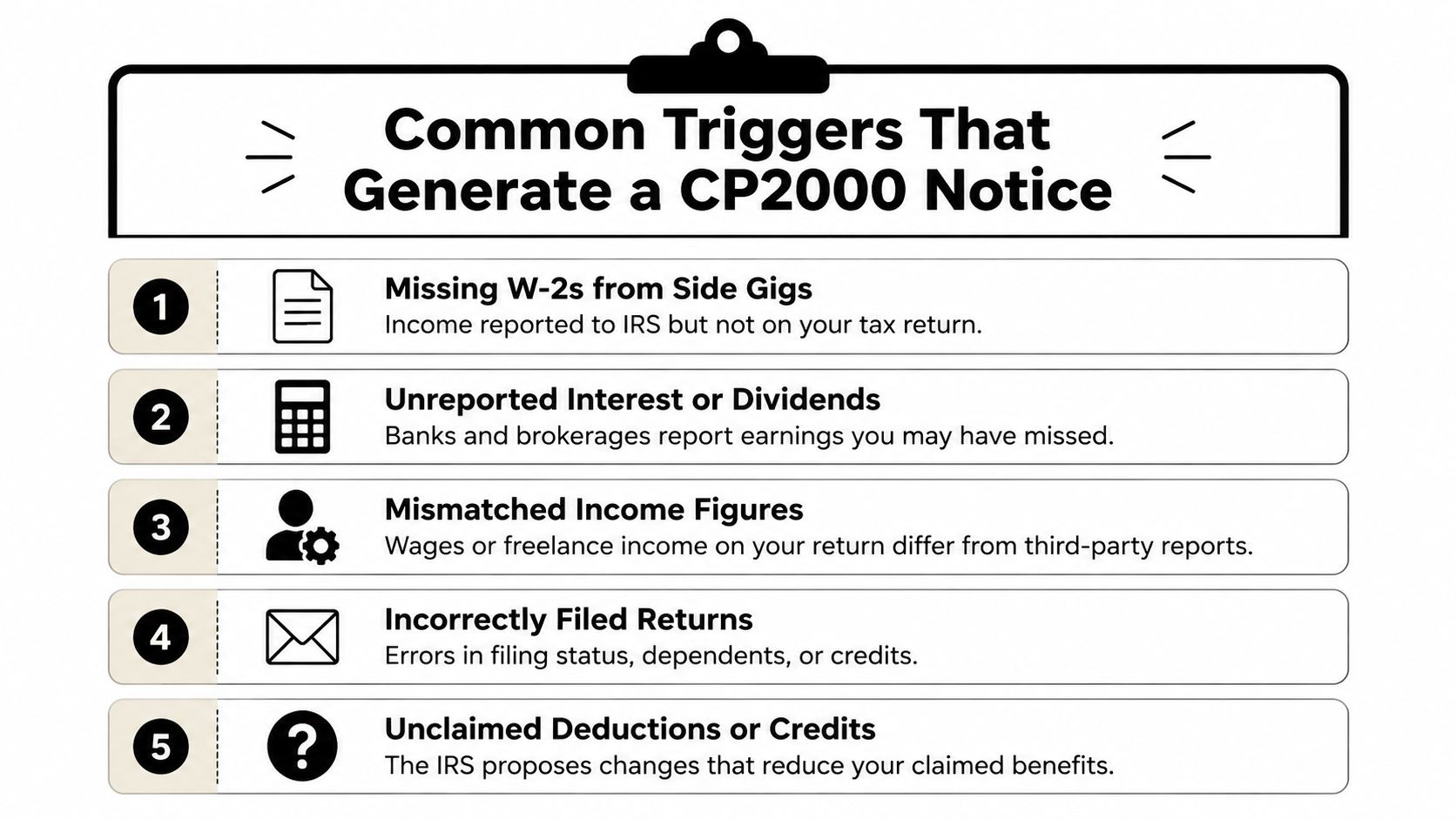
Missing wage and freelance forms
A W-2 from a side job, temporary employer, or previous employer may not have made it onto the return. The same issue appears with freelance and contractor income reported on Forms 1099. For example, a freelancer may receive several 1099-NEC forms, include payments from regular clients in bookkeeping, but accidentally omit one payer when preparing the return. Review the notice against your wage statements, bookkeeping records, and filed schedules. For additional guidance on reporting these forms, consult the 1099 filing requirements.
Interest, dividends, and brokerage information
Banks and brokerages report interest, dividends, and certain transaction information to the IRS. A taxpayer may overlook a small savings account, fail to download a year-end brokerage statement, or report a figure from an earlier statement instead of a corrected one. Investment sales create another common problem because the gross proceeds reported by a brokerage may not equal the taxable gain after considering basis and other transaction details.
Cryptocurrency and payment processor records
Digital asset activity can create a mismatch when an exchange or payment platform reports transactions that the taxpayer didn't include correctly. The key issue is often reconciliation. Compare the form identified by the IRS with exchange statements, transaction histories, and the figures reported on the return. Don't assume that the amount shown by a third party is automatically the taxable amount.
Rental and pass-through reporting
Rental property records can become disconnected from the tax return when income is reported on one schedule but expenses, ownership percentages, or related forms are handled differently. Similar discrepancies can arise with pass-through income when a taxpayer receives a Schedule K-1 after filing or enters the amount incorrectly.
Corrected forms and duplicate figures
A payer may file a corrected form after the taxpayer has already filed. A taxpayer may also report the same income through bookkeeping and then enter the information again from a 1099. In either case, the IRS computer sees a difference that requires a human explanation.
Build a complete comparison before choosing a response. Gather the filed return, every form named in the notice, corrected forms, bank or brokerage statements, and records supporting related deductions.
How to Read and Understand Your CP2000 Notice
A CP2000 can look like a bill, but it is a proposed adjustment. Read it as the IRS's case against your filed return, then test each item against your records before accepting anything.
Start with the deadline and instructions
Find the response date on the notice, along with the mailing address, response form, signature requirements, and document instructions. Use the address printed on your notice. Do not copy an address from another taxpayer's letter or an online forum.
Confirm that the correspondence is genuine before sharing information or sending payment. The IRS publishes information about its notices, and consumer-protection resources can help you spot fake IRS calls in Minnesota and separate government communications from scams.
Silence can allow the IRS to treat the proposed adjustment as agreed. Treat the deadline as a decision point, not a suggestion. If your records are incomplete, request help promptly rather than letting the response period expire.
Identify the reporting source
The notice names the employer, bank, brokerage, payer, or other source tied to the mismatch. Record the form type, payer, tax year, third-party amount, and amount shown on your return.
Then locate the relevant schedule on the filed return. Determine whether the item was omitted, reported under another payer, entered on the wrong line, or already included elsewhere. Memory is not enough for this review.
Examine the proposed calculation
The IRS may adjust income and then recalculate tax, credits, deductions, or payments. The proposed increase in income may change other parts of the return, so the amount shown as additional tax requires a line-by-line review.
Check whether the IRS used a corrected form, counted the same item twice, or removed a deduction or credit that still applies. Mark every unexplained line and gather the record that answers it.
| Notice area | What to verify |
|---|---|
| Information received | Payer, form, tax year, and reported amount |
| Information reported | Where the item appears on your filed return |
| Proposed changes | Income, deductions, credits, payments, and resulting tax |
| Response instructions | Deadline, signature, documents, and mailing address |
Your notes should lead to one clear decision: accept the proposal, accept only specific items, or dispute it with an explanation and supporting records. Do not send a bare denial. A precise response gives the IRS a basis to correct the proposal before it becomes a formal deficiency.
Your Three Response Options and When to Use Each
A CP2000 is a proposal, not a final bill. Decide how to respond after matching each proposed change to your records, not by reacting to the amount shown.
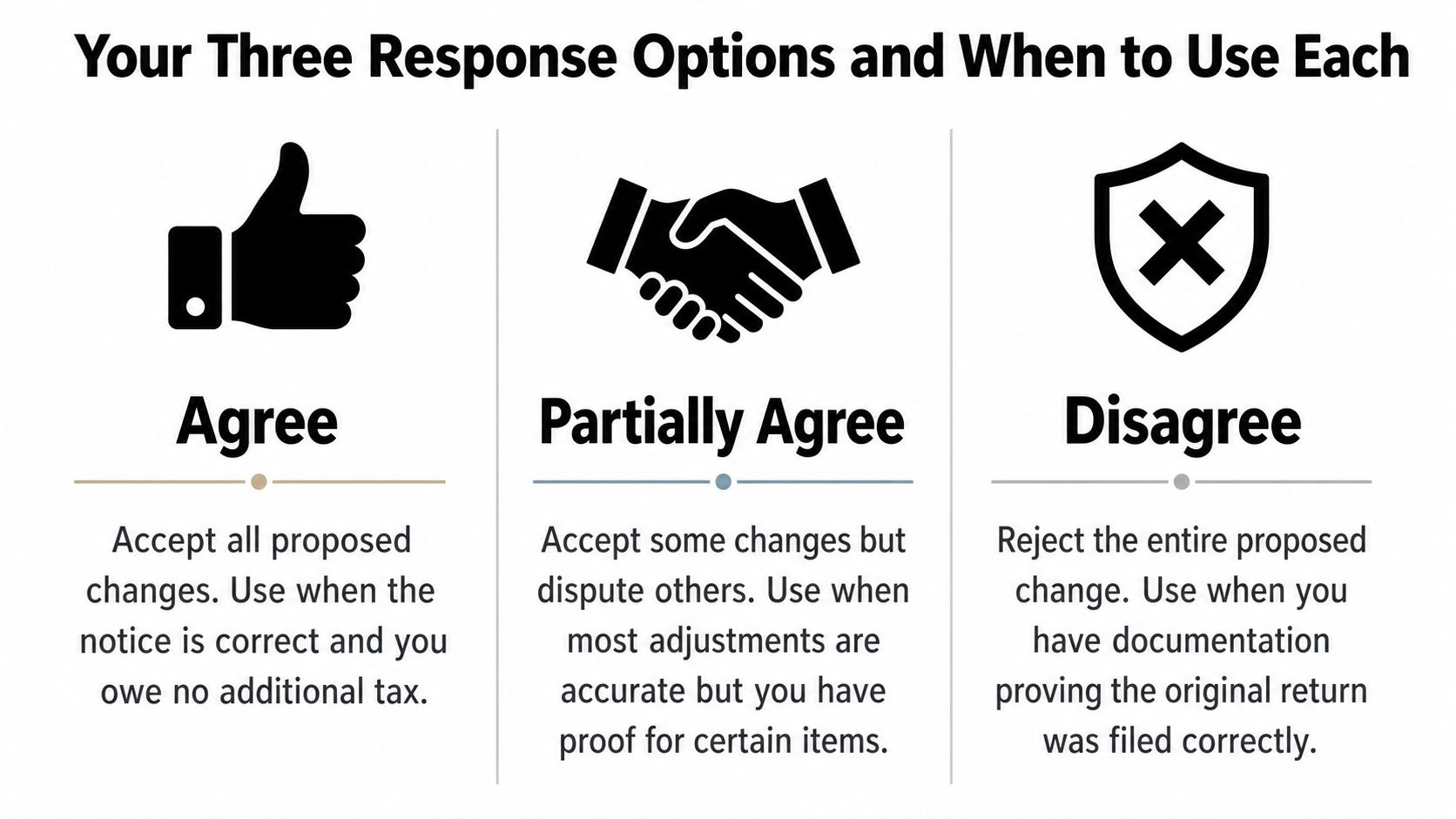
Agree with all proposed changes
Agree when the IRS information is accurate and your return omitted or misstated the item. Complete, sign, and return the response form as directed, including any requested documents. If the adjustment creates a balance you cannot pay immediately, address payment through the available arrangements. Ignoring the notice does not solve the balance.
Before agreeing, reconcile the tax year, payer, form, and amount. Confirm that the proposed calculation accounts for the related deductions, credits, and payments shown on your return. An accurate agreement prevents a simple mismatch from becoming a larger correction.
Partially agree with the proposal
Use partial agreement when the notice combines correct and incorrect adjustments. You might accept income reported by one payer while disputing another item because it was already included elsewhere, or because a connected deduction was omitted from the IRS calculation.
Separate accepted items from disputed items in your response. Identify each line, state the amount you accept, explain the disagreement, and attach records supporting the disputed portion. If the correction requires changing the original return, first confirm the response strategy, then review whether filing an amended tax return is appropriate.
Disagree with the entire proposal
Choose full disagreement only when your records support the filed return or show that the third-party information is wrong. Address every proposed change, explain your position plainly, and include documents that let the reviewer verify the facts without guessing.
Silence is not a fourth option. The IRS can treat an unanswered proposal as agreement and proceed when the mismatch remains unresolved. That process can lead to a CP 3219A notice, which begins the formal deficiency stage described in earlier procedural guidance.
Respond before the notice deadline. Even if you need clarification, send a written response rather than allowing the proposal to stand unanswered. A complete, timely response gives the IRS facts to evaluate before the matter escalates.
How to Dispute a CP2000 Notice Successfully
A weak dispute says the IRS is wrong. A strong dispute shows exactly why, line by line, with documents that prove the correct treatment.
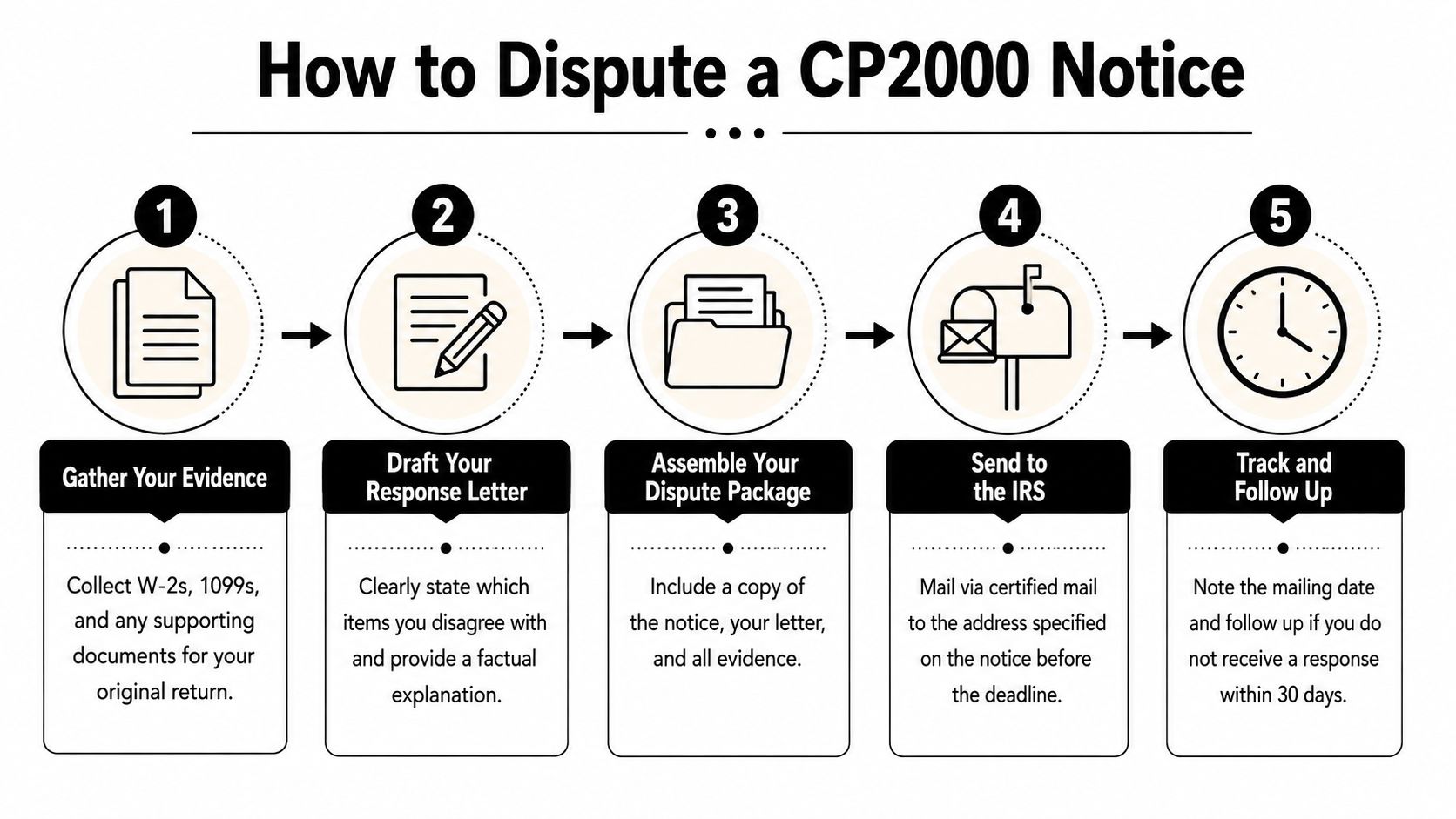
Build the evidence file first
Collect the CP2000, the complete filed return, and every form referenced in the notice. Add corrected W-2s or 1099s, payroll records, bank statements, brokerage confirmations, transaction histories, and records supporting deductions or credits connected to the disputed item.
Organize documents in the same order as the notice. If the notice lists several payers, create a separate subsection for each payer. Highlight the relevant amounts, but don't mark original documents. Send copies unless the notice specifically requires something else.
Draft a factual response letter
Your letter should identify the taxpayer, tax year, notice number, and each proposed adjustment being disputed. Use a simple structure:
- State the position: Explain whether you disagree with all or part of the proposal.
- Address each item: Match your explanation to the notice's payer and form.
- Show the correction: Explain where the amount appears on the filed return or why the third-party figure is wrong.
- List attachments: Number the supporting documents and refer to those numbers in the letter.
Avoid emotional language and unsupported conclusions. The reviewer needs a reconciliation, not a general complaint about the IRS.
Submit and preserve proof
Send the response to the address on the notice before the deadline. Use a delivery method that gives you evidence of mailing and delivery, and keep a complete copy of the package, including the signed response, letter, attachments, and mailing record.
If you need more time, request it promptly and follow the notice instructions. Don't assume that a phone conversation automatically extends the written response deadline. Record the date, the representative's name if available, and the substance of any instructions.
Follow up intelligently
The IRS may need time to review a documented response. Keep the notice, response, and delivery proof together so you can answer future correspondence consistently. If another notice arrives, compare it with your submission before sending a new explanation.
The most common mistake is sending a large stack of records without telling the reviewer what each document proves. Make the reviewer's task easy. A concise cover letter and an indexed package are more persuasive than volume alone.
Payment Options and Managing Penalties
If your reconciliation confirms that additional tax is due, separate the dispute question from the payment question. First determine the correct amount. Then decide how to satisfy the balance without ignoring the IRS correspondence.
A CP2000 proposes changes based on third-party information, and the proposed amount can change after the IRS considers your explanation, deductions, credits, payments, or corrected forms. Don't borrow money or commit to a payment arrangement based solely on an unreviewed proposal.
Pay the corrected balance if possible
If you agree with the final amount and can pay it, follow the IRS payment instructions and retain proof of payment. Confirm whether the payment is being applied to the correct tax year and account.
If you can't pay in full, don't wait until collection notices arrive. Review the IRS payment plan options and determine which arrangement fits your financial circumstances. An installment agreement may spread payments over time, but it doesn't erase the underlying liability or stop all charges.
Review penalties separately
A proposed adjustment may include more than tax. Review the notice for interest and penalties, and identify whether the facts support a request for penalty relief. Reasonable-cause arguments require a factual explanation and supporting evidence, such as circumstances that prevented accurate reporting or proof that a third-party error caused the mismatch.
Don't request relief with a vague statement that you made an honest mistake. Explain what happened, what records you relied on, what corrective action you took, and why the requested relief is appropriate.
Protect your household cash flow
Prioritize an accurate tax calculation before negotiating payment terms. If the proposed amount includes income that was already reported or excludes a related deduction, a payment plan based on the larger figure may create avoidable financial pressure.
Keep copies of payment confirmations and correspondence. If the IRS later adjusts the proposed amount, reconcile the account again and verify how prior payments were applied.
When to Bring in a Tax Professional for Help
You can often handle a straightforward CP2000 yourself when one form is missing, the payer information is accurate, and the return is otherwise simple. You should still reconcile the notice carefully and respond in writing by the stated deadline.
Professional help becomes more valuable when the notice requires judgment rather than transcription. A tax professional can reconstruct the facts, identify related deductions, prepare a targeted response, and communicate with the IRS when representation is authorized.
Bring in help when the records are complex
Consider a CPA, enrolled agent, or tax attorney if the notice involves cryptocurrency, rental properties, brokerage sales, multiple businesses, or income reported through several forms. These matters often require more than matching a number. You may need transaction reconstruction, basis analysis, allocation of expenses, or correction of a payer's form.
Multiple tax years, unfiled returns, prior IRS disputes, or a notice that raises broader compliance concerns also justify professional review. A CP2000 may concern one year, but the underlying recordkeeping issue can affect other filings.
Don't wait until the proposal becomes final
The strongest time to seek help is after receiving the CP2000 and before sending an unsupported response. Once you submit an incomplete explanation, you may need to correct the record through additional correspondence. A professional can help you decide which facts belong in the response and which documents support each point.
Allied Tax Advisors provides notice-response preparation, audit representation, and IRS and state resolution services. Its team includes CPAs and enrolled agents who work with individual returns, business filings, amended returns, capital gains, cryptocurrency taxation, and rental-property compliance.
Use a simple decision test
Handle the notice yourself when you can answer these questions confidently:
- What exact form or payer created the mismatch?
- Where does the item appear on your filed return?
- Is the IRS amount correct, partially correct, or wrong?
- What documents prove your position?
- Can you meet the response deadline?
If you can't answer those questions, get advice before signing or mailing the response. A calm, documented decision is cheaper and safer than allowing silence to move the matter toward a formal deficiency.
If you've received an IRS Notice CP2000, Allied Tax Advisors can review the notice, reconcile the IRS figures with your return, prepare supporting documentation, and help you respond before the deadline. Visit Allied Tax Advisors to request assistance with your CP2000 response and related tax-resolution needs.