
Bring a government-issued photo ID, taxpayer identification details for everyone on the return, the prior year's tax return, every income document, deduction and expense records, business or investment statements when applicable, and all IRS or state correspondence tied to unresolved issues. The IRS also advises taxpayers to gather supporting documents such as W-2s, 1099s, bank and payment-app statements, receipts, mileage logs, property records, charitable donation records, estimated tax payments, and business expense records before filing.
You may arrive with a neat folder and still discover that one missing document changes the return. A client brings a W-2 but forgets a freelance 1099, a brokerage statement, dependent information, or an IRS notice that explains why the appointment was scheduled. The problem isn't the amount of paper. It's the missing context.
The best answer to what to bring to a tax appointment is a complete, organized picture of your finances and tax obligations for the relevant year. That includes identity, income, deductions, life changes, property, health costs, business activity, investments, crypto transactions, and unresolved government correspondence. The IRS specifically recommends gathering source documents before filing, including records from banks, payment apps, card processors, and online marketplaces, because reported income may need to be reconciled across multiple systems. See the IRS document-gathering guidance for the agency's appointment and filing expectations.
Create a digital or physical folder organized by tax year, person, and issue. If you're also planning for retirement, keep tax records alongside the financial information discussed in this Federal Benefits Sherpa retirement planning guide. The eight categories below help you find the records most likely to be overlooked.
Table of Contents
- 1. Income Documentation
- 2. Deduction and Expense Records
- 3. Investment and Capital Gains Documentation
- 4. Mortgage Interest, Property Tax, and Home Expense Documentation
- 5. Medical Expense and Health Insurance Documentation
- 6. Business and Self-Employment Records
- 7. Tax Return Extensions, Prior Year Notices, and IRS Correspondence
- 8. Identification, Social Security Numbers, and Dependent Documentation
- Tax Appointment: 8-Item Comparison
- Turn the Checklist Into a Productive Meeting
1. Income Documentation
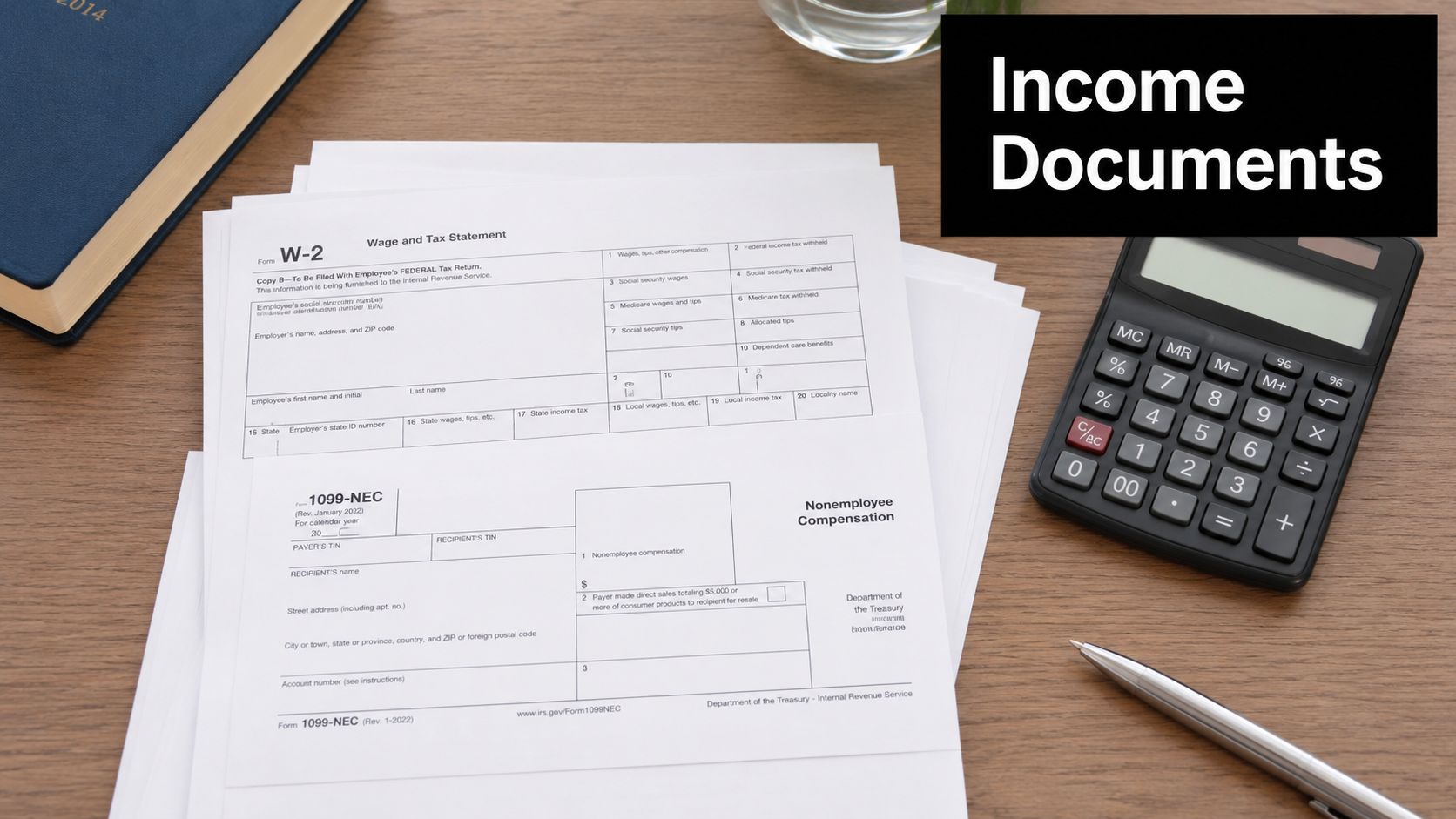
Income records form the foundation of the return. Bring every W-2 from employment, every 1099 received from clients or financial institutions, and statements for income that may not arrive on a standard form. Include wages, freelance payments, rental receipts, retirement distributions, interest, dividends, unemployment benefits, and other taxable activity that applies to your household.
A San Diego real estate investor might need W-2 wages, rental ledgers, bank statements, and investment distributions in the same appointment. A freelance consultant may receive several 1099-NEC forms from different clients, while an S corporation owner may have both W-2 wages from the company and a K-1 from the entity. These situations create a common mistake, treating one form as a complete income record.
Reconcile forms with your own records
Download statements from each payer and compare them with your accounting records and bank activity. Gather 1099-NEC, 1099-MISC, 1099-K, 1099-INT, and 1099-DIV forms where applicable, along with platform payout summaries from payment apps or online marketplaces. A form can be missing, corrected later, or different from your internal total, so flag discrepancies rather than trying to explain them from memory.
For self-employed work, export a year-end income report from QuickBooks or similar software. Include invoices and a list of payments received that don't appear on a 1099. The IRS recommends collecting W-2s, 1099s, and bank or payment-app statements before filing, because taxpayers may need to reconcile income reported by third parties with their own records.
Practical rule: Bring the form, the underlying statement, and your reconciliation notes when the amounts don't match.
Save documents throughout the year instead of beginning the search shortly before the appointment. If an employer or payer hasn't provided a document, request it promptly and tell your preparer what is missing. Don't omit income just because no form arrived.
2. Deduction and Expense Records
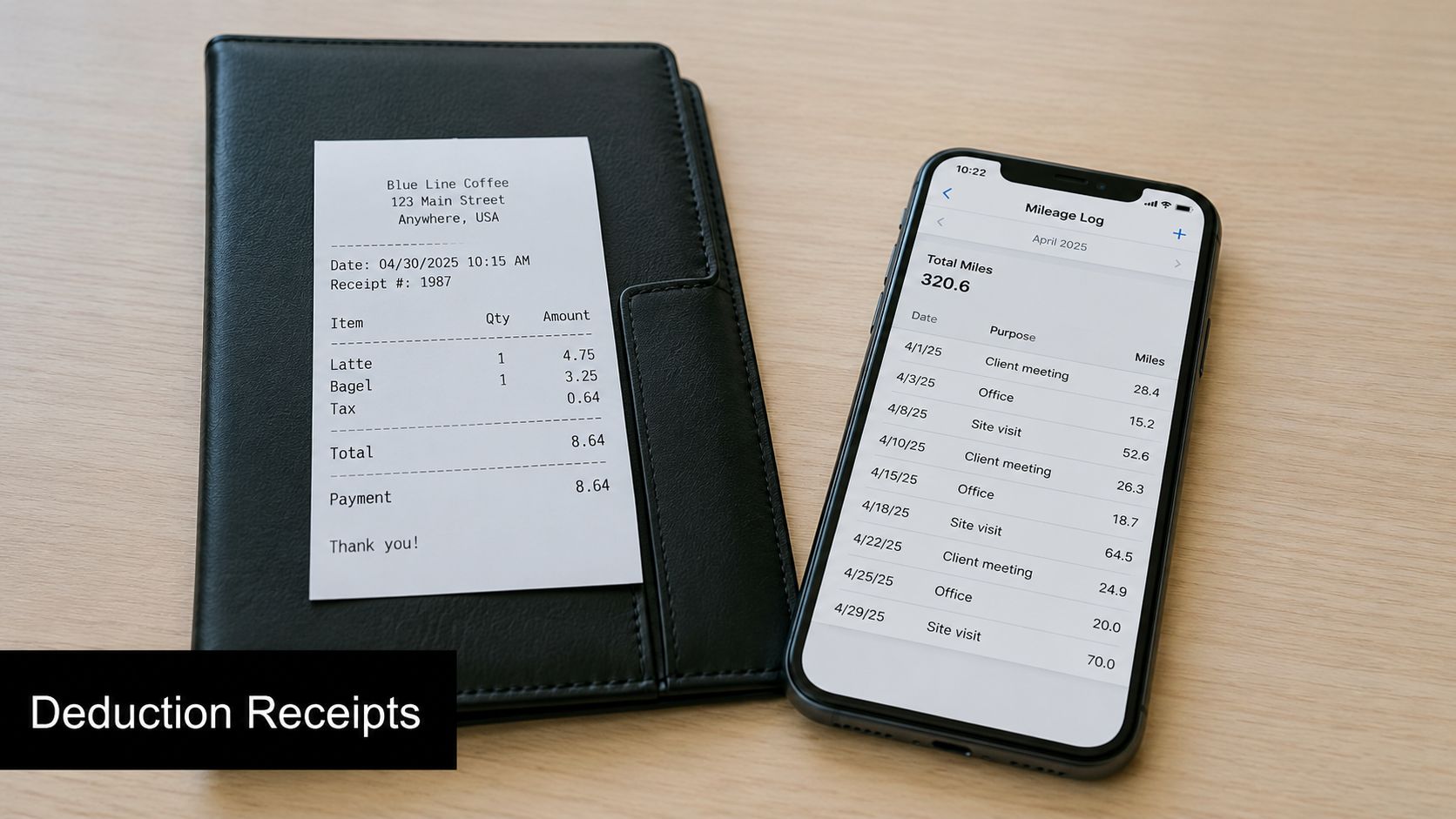
A deduction is only useful when you can explain and support it. Bring receipts, invoices, bank and credit card statements, mileage logs, charitable acknowledgments, and other records that show what you paid, when you paid it, and why it relates to the claimed activity. The IRS document checklist specifically identifies receipts, mileage logs, charitable donation records, mortgage and property-tax records, and business expense records as relevant supporting documents.
A small business owner may need receipts for software, supplies, professional education, and advertising. A rental owner may need mortgage interest, repairs, property management fees, and maintenance records. A real estate agent may need vehicle logs and marketing receipts. Each taxpayer's file should reflect the activity that occurred, not a generic stack of expense categories.
Separate evidence from estimates
Organize receipts by category, such as travel, meals, supplies, equipment, and services. Digital copies stored through tools such as Expensify or Wave can work well, but only if the files remain readable and are labeled with useful descriptions. A folder full of unlabeled phone photographs doesn't save much time.
Mileage records deserve special attention. Keep dates, destinations, mileage, and business purpose in a contemporaneous log. A bank statement can prove that fuel was purchased, but it usually doesn't explain the business purpose or distance of a trip.
For charitable donations, bring written acknowledgments from the organizations. For investment losses, provide the account statement and transaction detail rather than relying on a handwritten total. For rental property, separate routine repairs from improvements because the distinction may affect how the cost is reported.
You don't need to bring every personal grocery receipt. You do need to bring enough organized evidence for the expenses you want reviewed, plus notes about unusual or mixed-use purchases. That balance is more productive than either extreme, discarding records or delivering an unsorted box.
If you want to discuss broader strategies, bring your organized expense categories to a conversation about how to reduce your tax bill with planning. Planning works better when it starts with reliable records.
3. Investment and Capital Gains Documentation
Investment income is often missing from an otherwise complete tax file. Download year-end statements from every brokerage account, including accounts held at Fidelity, Charles Schwab, E*TRADE, and other institutions. Include dividend and interest statements, realized gain and loss reports, transaction histories, stock-option or restricted-stock activity, and records of securities transferred between accounts.
The year-end summary may not answer every basis question. If you sold an asset, verify the purchase date, purchase cost, holding period, reinvested dividends, transferred basis, and any wash-sale information. An inherited security may require estate or inheritance records to support the basis used. A property sale may require the closing statement, improvement records, and prior depreciation information.
Treat crypto as transaction data
Crypto users shouldn't rely only on an exchange's annual summary. Collect records of buys, sells, trades, transfers, staking or other reportable activity, dates, units, proceeds, and fair market values. If assets moved among wallets or platforms, document those transfers so the preparer can distinguish transfers from dispositions.
Tools such as CoinTracker and Koinly can help generate transaction reports, but review the export before the appointment. Missing wallet addresses, duplicate imports, and unidentified transfers can create questions that software can't resolve on its own. Bring the raw exchange statements as well as the summarized report.
A San Diego technology employee with restricted stock unit vesting may need employer documents, payroll records, and brokerage statements. An investor with inherited securities should bring the documents that explain how the investment came into the account. A crypto investor should bring exchange exports and a short explanation of wallet activity.
For background on reporting sales and basis, review capital gains taxes and what to know. The useful preparation step is not merely downloading a statement. It's identifying every account and transaction that could affect the return.
4. Mortgage Interest, Property Tax, and Home Expense Documentation
Homeownership creates records that should be assembled by property, not thrown into a general expense folder. Bring mortgage interest statements or lender documentation, property-tax bills and payment records, settlement documents for a purchase or sale, and receipts for substantial improvements. If you own rental property, create a separate file for each address.
A homeowner may bring a mortgage statement and property-tax record for review. A home-based business owner may also need utility, internet, rent, or mortgage information and a clear measurement of the workspace. A rental owner should distinguish repairs and maintenance from capital improvements and preserve purchase dates, costs, and prior depreciation schedules.
Preserve basis and allocation records
The most important question isn't always how much you paid. It may be what the payment represents. A contractor invoice for replacing a broken fixture is different from documentation for a major improvement. A shared internet bill may require an allocation based on business use. A mortgage statement for one rental property shouldn't be mixed with another property's records.
Prepare a property summary with:
- Property identification: Address, ownership structure, purchase date, and ownership changes.
- Income and expenses: Rent received, management fees, repairs, insurance, taxes, and utilities.
- Basis support: Closing statements, improvement invoices, and records supplied by the prior preparer.
- Use information: Personal, rental, business, or mixed use, with an explanation of the relevant allocation.
Homeowners considering the mortgage-interest treatment should bring complete lender records, not just a rough estimate. The IRS includes mortgage and property-tax records among the documents taxpayers should gather before filing. You can also review how mortgage-interest payments may affect deductions.
A San Diego investor with multiple properties will save time by labeling each statement with the property address. That simple step prevents the preparer from reconstructing which mortgage, repair, or improvement belongs to which activity.
5. Medical Expense and Health Insurance Documentation
Medical records can be scattered across doctors, hospitals, pharmacies, dentists, vision providers, insurers, and health accounts. Bring a year-end summary if a provider offers one, but keep the underlying receipts and payment records available. Include health insurance premium notices, medical and dental bills, prescription receipts, co-pays, deductibles, eligible equipment purchases, and records of HSA contributions and distributions.
A self-employed consultant may need health insurance premium documentation for review. A taxpayer managing ongoing treatment may have expenses across several providers. Someone who paid for dental work, vision care, prescriptions, or medical equipment should create one summary rather than expecting the preparer to identify eligible costs from individual credit-card charges.
Identify reimbursement and account payments
Separate amounts paid personally from amounts reimbursed by insurance, an employer, an HSA, or another account. A medical bill alone doesn't show who ultimately paid it. Include Medicare or supplemental coverage notices where relevant, and mark expenses that remain unpaid or were reimbursed later.
Medical travel and equipment records also need context. Keep the date, destination, purpose, and payment evidence for travel connected with medical care. For equipment, retain the invoice and a description of its use. These details help distinguish a potentially relevant cost from an ordinary personal purchase.
The IRS document checklist identifies medical and dental bills as records to bring when applicable. The practical trade-off is clear: don't flood the appointment with unrelated personal receipts, but don't reduce a complicated medical year to a single total copied from a bank statement. Give the preparer a categorized summary and retain the supporting documents.
For a business owner using an HSA, bring contribution records and distributions together. That lets the preparer compare account activity with qualified medical expenses instead of treating the HSA as an isolated financial account.
6. Business and Self-Employment Records
A business return needs more than a pile of receipts. Bring a current profit and loss report, revenue detail, business bank statements, credit-card statements, expense summaries, asset purchases, depreciation schedules, mileage logs, and estimated tax payment records. If you use QuickBooks, export reports that show the categories behind the totals.
A freelance consultant should bring client invoices, payment records, expense categories, and evidence of estimated payments. An S corporation owner may need the company's profit and loss statement, payroll information, K-1, ownership documents, and records of distributions. A contractor may need vehicle-use records, equipment purchases, and home-office information.
Make the books reviewable
Before the meeting, reconcile the business bank account and investigate uncategorized transactions. Don't label every unclear charge as an office expense. Add a note for personal payments made on behalf of the business, owner contributions, transfers between accounts, and purchases that may need capitalization or depreciation treatment.
Use a short business summary with:
- Revenue: Gross receipts by client, platform, property, or service line.
- Operating costs: Supplies, software, services, rent, utilities, insurance, and professional fees.
- Assets: Equipment, vehicles, technology, and other purchases with dates and costs.
- Tax payments: Estimated payments, payment confirmations, and any balance carried forward.
- Use allocations: Mileage, home office, mixed-use equipment, and personal portions.
Quarterly payment records are easy to overlook because the payments may come from a personal account. Bring confirmations, canceled payments, vouchers, or account transcripts. The IRS document guidance specifically includes estimated tax payments and business expense records among the information taxpayers should assemble.
If you need to verify payment timing and planning questions, keep the records beside the information in this guide to quarterly estimated tax payments. The preparer can work faster when the accounting report and the payment evidence tell the same story.
7. Tax Return Extensions, Prior Year Notices, and IRS Correspondence
Put unresolved government correspondence near the top of your appointment folder, not at the bottom. Bring IRS notices, state tax letters, audit requests, collection communications, amended-return filings, payment arrangements, penalty-abatement requests, and any response you already sent. Include the envelope or notice date when available because deadlines and issue descriptions matter.
A taxpayer responding to a CP2000 notice may need the notice, the return in question, income records, and an explanation of why the IRS information differs. A business owner facing an audit should bring the records supporting the prior position. Someone who filed an extension should bring the confirmation and the records needed to complete the return, not assume the extension itself resolved the tax obligation.
Build a notice packet
Organize correspondence by tax year and issue. Put the newest letter first, then attach the return, schedules, payment proof, and prior responses connected to that letter. Write a short timeline on the first page. Include what the agency requested, what you submitted, and what remains unanswered.
The Taxpayer Advocate Service explains that an appointment confirmation packet may include Form 4564, the Information Document Request, so taxpayers know which records to bring. Its guidance also says in-person appointments may require a current government-issued photo ID and, in some cases, two original forms of identification plus a copy of the return for the relevant year. If your appointment relates to a notice, read the packet carefully and follow its document list.
For older returns, the IRS allows taxpayers to request copies through Form 4506, and transcripts can provide another route to historical information. Bring copies of prior returns available to you, but don't delay the appointment while trying to recreate every older file.
For fax-related preparation, a guide to an IRS fax cover sheet may help you format a submission. Follow the instructions in the notice itself, and keep proof of anything sent.
8. Identification, Social Security Numbers, and Dependent Documentation
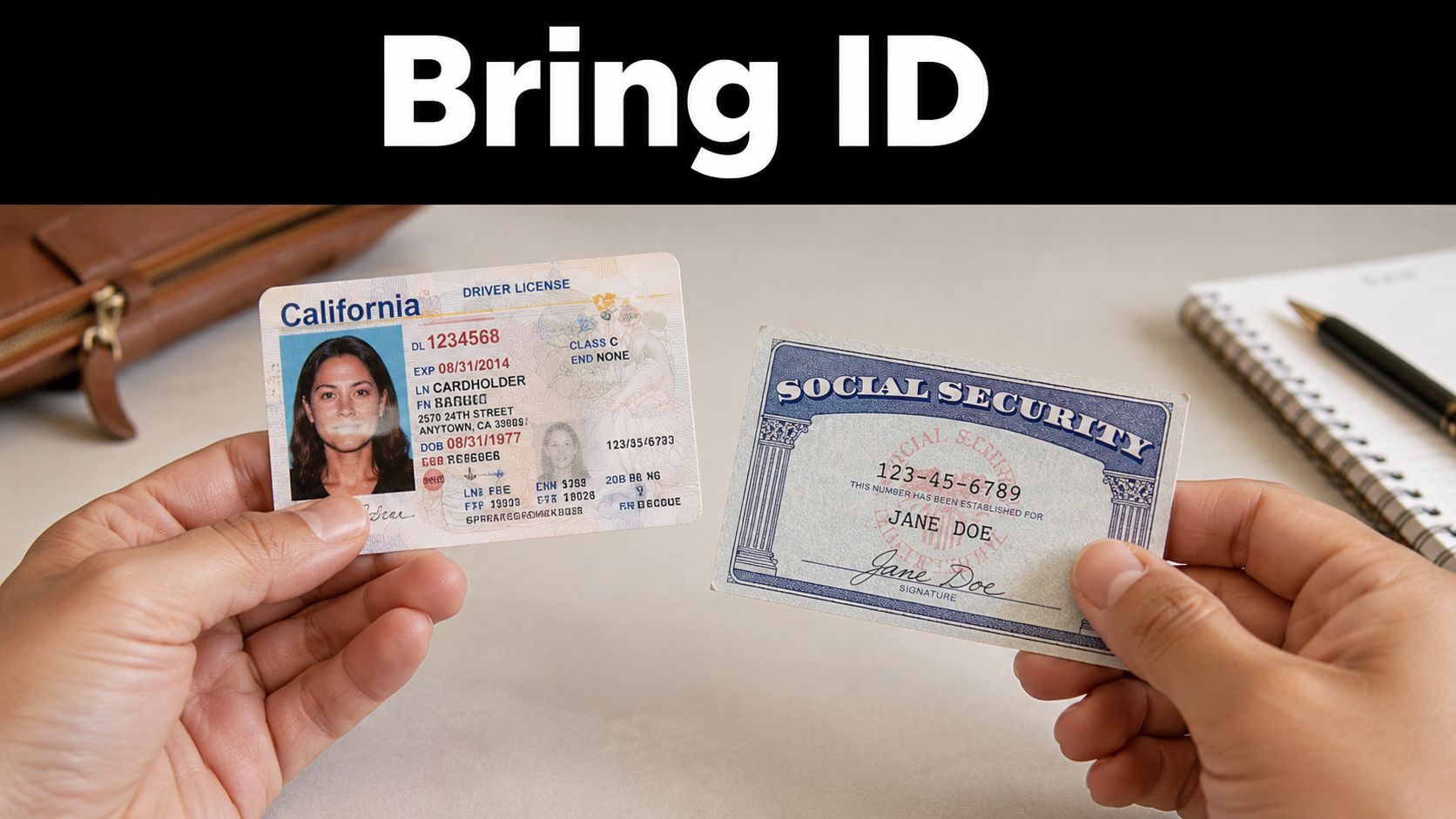
Identity and dependent information should be verified before the appointment. Bring a current government-issued photo ID, such as a driver's license, passport, or state ID, plus the Social Security numbers or ITIN details for the taxpayer, spouse, and dependents. The IRS says taxpayers visiting a local office should bring photo identification, a taxpayer identification number, and supporting tax documents.
A married couple filing jointly should bring identification for both spouses. Parents claiming children should verify names, birth dates, and identification numbers against their official records. A newly adopted child may require adoption documents, while separated or divorced parents may need custody or guardianship records relevant to the dependent claim.
Resolve changes before filing
Make a list of life changes that affect the return, including marriage, divorce, a new dependent, adoption, a name change, a corrected Social Security record, or a change in custody. Bring documents that explain the change rather than relying on an informal description.
Use this preparation list:
- Taxpayer identity: Current photo ID and taxpayer identification information.
- Spouse details: Identification and updated legal-name information for a joint return.
- Dependent records: Names, birth dates, Social Security cards or verification, and relationship information.
- Legal support: Birth certificates, adoption papers, custody orders, or guardianship documents when relevant.
- Bank information: Account and routing details if the preparer needs them for a refund or payment setup.
Don't email unprotected Social Security numbers or identity documents unless your preparer provides a secure portal. Bring originals when the appointment instructions require them, and keep copies in your own records. A complete identity file prevents avoidable delays and gives the preparer reliable information for filing status and dependent review.
Tax Appointment: 8-Item Comparison
| Item | Implementation Complexity 🔄 | Resource Requirements ⚡ | Expected Outcomes 📊 | Ideal Use Cases 💡 | Key Advantages ⭐ |
|---|---|---|---|---|---|
| Income Documentation (W-2s, 1099s, Salary Statements) | 🔄 Medium, consolidation across employers and payers | ⚡ Low–Medium, employer forms, payroll records, basic accounting | 📊 Accurate tax liability and withholding reconciliation | 💡 All taxpayers; self-employed and S‑Corp/LLC owners | ⭐ Ensures complete reporting; prevents IRS discrepancies |
| Deduction & Expense Records (Receipts, Bank Statements, Logs) | 🔄 High, requires detailed, categorized records | ⚡ Medium–High, receipts, mileage logs, expense apps | 📊 Reduced taxable income; stronger audit defense | 💡 Business owners, freelancers, rental investors | ⭐ Maximizes legitimate deductions; audit substantiation |
| Investment & Capital Gains Documentation (Brokerage, Crypto) | 🔄 High, cost-basis, holding periods, crypto complexity | ⚡ High, brokerage statements, transaction history, tax software | 📊 Accurate capital gains/losses; enables tax-loss harvesting | 💡 Active investors, RSU/option holders, crypto traders | ⭐ Prevents overpayment; supports favorable gain treatment |
| Mortgage Interest, Property Tax & Home Expenses | 🔄 Medium, itemization and allocation (home office) | ⚡ Medium, Form 1098, tax bills, improvement invoices | 📊 Potentially larger itemized deductions (subject to SALT cap) | 💡 Homeowners with significant mortgage/taxes; rental owners | ⭐ Optimizes itemizing and home-office allocations |
| Medical Expense & Health Insurance Documentation | 🔄 Medium, aggregation across providers; AGI threshold | ⚡ Medium, medical bills, premium statements, HSA records | 📊 Possible deductions if unreimbursed expenses >7.5% AGI | 💡 Self-employed and high medical-cost taxpayers | ⭐ Deductible self-employed premiums; HSA/medical tracking |
| Business & Self-Employment Records (P&L, Estimates) | 🔄 High, ongoing bookkeeping and entity documentation | ⚡ High, accounting software, invoices, estimated payment records | 📊 Improved tax planning, compliance, and entity optimization | 💡 Freelancers, contractors, S‑Corp/LLC owners | ⭐ Enables tax optimization (depreciation, entity selection) |
| Tax Return Extensions, Prior Notices & IRS Correspondence | 🔄 High, review of historical issues and responses | ⚡ Medium, prior returns, IRS letters, extension confirmations | 📊 Resolution of past issues; informed filing strategy | 💡 Taxpayers with audits, notices, or extension filings | ⭐ Supports audit defense and back‑tax resolution |
| Identification, SSNs & Dependent Documentation | 🔄 Low, straightforward verification steps | ⚡ Low, government IDs, SSNs, custody/adoption papers | 📊 Enables e‑file acceptance and accurate credit claims | 💡 All filers, especially those claiming dependents/credits | ⭐ Essential for filing; prevents SSN mismatches and rejects |
Turn the Checklist Into a Productive Meeting
Preparation should end with a review, not with a full folder placed unopened on the desk. Start by listing every income source you had during the year. Compare that list with the W-2s, 1099s, platform statements, brokerage reports, rental ledgers, and business accounting records you collected. Flag missing forms, corrected forms, unexplained deposits, and totals that don't reconcile.
Next, separate personal and business records. A mixed bank account may still contain usable information, but it makes classification slower and increases the need for explanations. Mark business mileage, home-office allocations, rental-property repairs, improvements, asset purchases, and payments made from personal funds. Give each property, business, or investment account its own subfolder.
Label everything by tax year, taxpayer, and issue. A useful file name might identify the year, document type, institution, and account or property. For paper records, use dividers. For digital records, use consistent folders and preserve the original statements alongside summaries or spreadsheets.
Place IRS and state notices at the top of the review folder. Add a one-page note that states the notice date, response deadline, tax year, amount or issue described in the notice, and action already taken. The IRS and Taxpayer Advocate Service both emphasize supporting records and identity documents in appointment workflows, so don't treat correspondence as background reading. It may determine what the preparer must address first.
Keep records after the appointment. The IRS says tax records generally should be retained until the period of limitations expires, often three years, although longer retention can apply in situations such as substantial underreporting or certain employment-tax matters. See the IRS explanation of how long to keep tax records. Permanent retention of filed returns, with selective supporting records for property, investments, business assets, and major life events, is a practical safeguard.
Bring questions, too. Ask about estimated payments, deductions, investment sales, rental-property basis, crypto exports, entity reporting, missing forms, and unresolved notices. A tax preparer can review what you provide, but won't know about an account, sale, payment, or life change that never appears in the file.
Allied Tax Advisors can help individuals with annual filing, amended returns, capital gains, crypto taxation, and rental-property compliance. The firm also works with businesses on bookkeeping, payroll, S corporation and LLC filings, and with taxpayers handling IRS or state notices, audits, or back-tax matters. If your records are scattered or your situation includes several of these categories, prepare the folder before the meeting and bring the questions that explain where you need guidance.
Allied Tax Advisors helps individuals and businesses organize records for tax preparation, planning, rental-property reporting, capital gains, crypto activity, bookkeeping, and IRS or state resolution matters. Visit Allied Tax Advisors to request support and turn your tax-appointment documents into a clearer filing plan.