
You're probably staring at one of two realities right now. Either you're already doing tax returns for friends, clients, or a small office, and you can feel there's a bigger advisory role waiting, or you're trying to figure out whether this career is even worth the grind of exams, credentials, and constant rule changes. The honest answer is that how to become a tax advisor depends on the kind of work you want to do, because the path to a firm role, a solo practice, and IRS representation doesn't look the same.
A lot of beginner guidance stops at “get a PTIN and learn taxes.” That's too shallow. The better question is which credentials open doors, which ones are optional, and which ones you can't afford to skip if you want clients who trust you with real decisions like LLC setup, S corporation planning, rental property reporting, crypto transactions, or IRS notices.
Table of Contents
- What a Tax Advisor Actually Does
- Education Foundations You Need First
- Choosing Between CPA, Enrolled Agent, and Preparer Credentials
- Gaining Real Experience and Building Your Skill Stack
- Picking a Specialty Track That Fits
- Studying for the Exams and Maintaining Your Credentials
- Your 1 to 5 Year Timeline and Launch Plan
What a Tax Advisor Actually Does
A new client usually doesn't hire a tax advisor because they want a return filed. They hire one because they're worried about a decision, a notice, or a mistake they can't easily unwind. That's why this job pays for judgment, not just data entry.
A tax advisor sits between compliance and planning. One week, that means talking through whether a new LLC should stay simple or grow into something more formal. Another week, it means helping a rental-property owner think through depreciation and documentation, or answering an IRS notice before a small issue turns into a bigger one. For a deeper comparison of roles, tax consultants and tax advisors serve different client needs, and that difference matters when you're choosing your path.
Practical rule: If the work is only about copying numbers from forms, you're still in preparation, not advisory.
Where the real value shows up
The advisory layer is what changes the conversation from “what do I owe?” to “what should I do before the year closes?” That's where you earn more trust, because you're helping clients make choices that affect structure, timing, and exposure. It also means you need to explain technical ideas in plain English, since most clients don't care about code sections, they care about consequences.
The best tax advisors also know when to slow the client down. A business owner may want the fastest filing possible, but the better move could be revisiting entity choice, payroll handling, or estimated payments first. That's why this career rewards people who can listen carefully, ask unglamorous questions, and stay calm when the facts are messy.
Client work also changes by niche. An individual filer wants clarity and speed. A small business owner wants planning and continuity. Someone dealing with an audit or a back-tax problem wants a steady hand and a clear process. The core skill is the same across all of them, translate the code into a decision the client can live with.
Education Foundations You Need First
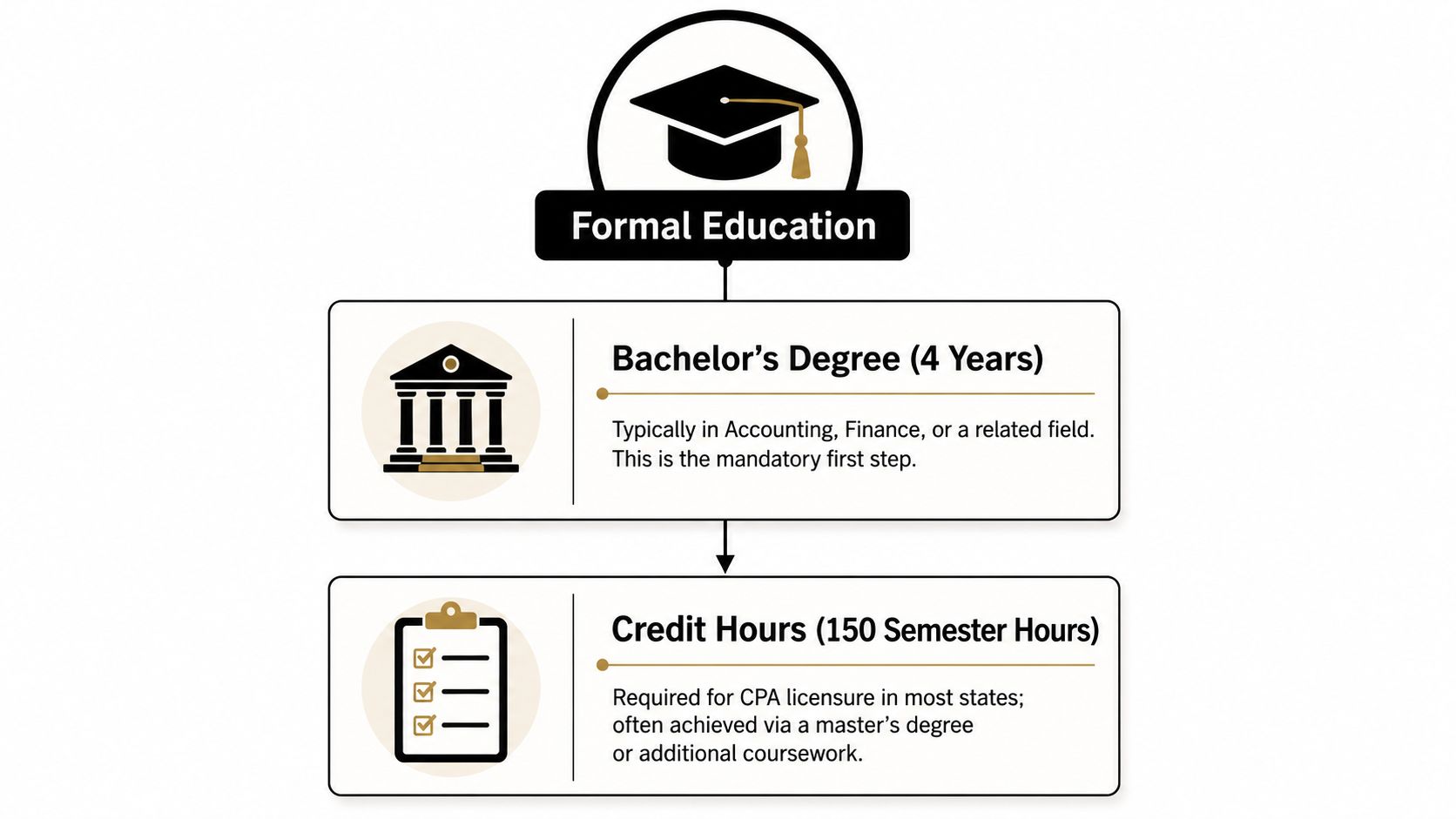
In the U.S., the usual starting point is a bachelor's degree followed by 150 semester hours of education to qualify for CPA licensure, which is a common credential for tax advisors, and the CPA exam is a four-part test according to ZipRecruiter's tax advisor career guide. That route surprises people because the extra credit hours catch a lot of candidates off guard.
What to study if you're still choosing courses
Accounting is the obvious major, but finance and related business fields can also work well if you build enough tax-specific coursework around them. Federal taxation, corporate taxation, audit, and business law are especially useful because they map directly to the questions clients ask later. A degree without those anchors can leave you technically educated but underprepared for actual tax work.
If you already have a degree in another field, the practical fix is usually extra coursework, a post-baccalaureate program, or credit completion through lower-cost options that fill the gaps. The point is not to collect random units. The point is to qualify for the path you actually want, whether that is firm employment, CPA licensure, or later specialization.
Useful habit: Keep a running checklist of your transcript, your remaining credits, and the state board rules you're targeting. People lose months because they assume “almost enough” is enough.
What the CPA exam means in practice
The CPA exam is not a single hurdle, it's a multi-part commitment. That matters because it changes how you study and how soon you can realistically apply for better roles. If you're aiming for broad mobility, especially in a larger firm or a mixed accounting and tax practice, the CPA path usually carries the strongest hiring signal.
For people who want a better grounding before taking that first step, basic accounting for small business is a useful concept to understand early, because tax work gets easier when the bookkeeping foundation is clean. Messy books create messy tax returns, and messy returns create messy advisory conversations.
Choosing Between CPA, Enrolled Agent, and Preparer Credentials
The credential you choose shapes the kind of work you can do and how clients see you. A CPA signals broad accounting authority and usually opens the widest firm opportunities. An Enrolled Agent, earned by passing the Special Enrollment Examination and meeting IRS suitability standards, is the more direct route for federal tax representation. A basic paid preparer needs a PTIN just to legally prepare federal returns, as noted by Accounting.com.
CPA, EA, and preparer side by side
| Credential | Authority Scope | Typical Timeline | Best For |
|---|---|---|---|
| CPA | Broad accounting and tax authority, strong hiring signal | Longer route because of education and exam requirements | Firm employees, advisors who want broad credibility, people who may widen into accounting work |
| Enrolled Agent | Federal tax representation before the IRS | Faster and more focused than the CPA path | Tax-focused specialists, resolution work, solo advisers who want IRS representation |
| Tax preparer with PTIN | Can prepare returns, but scope is narrower | Fastest entry point | Seasonal work, entry-level experience, people testing the field before investing more |
The IRS requirement for a PTIN is the minimum operational step. It gets you into the game, but it doesn't give you the authority or credibility that more advanced credentials do. If you want to represent clients before the IRS, the preparer-only path won't get you there.
Picking based on your goal
If your goal is a firm job with broad advancement, CPA is often the better long-term signal. If you want to focus heavily on tax and representation without building a full accounting track, EA is usually the sharper fit. If you want to test the field quickly, seasonal preparation with a PTIN can be the right first move.
That decision should also reflect the market you want to work in. Someone interested in the U.K. can compare domestic pathways and browse UK taxation courses to see how structured tax education is handled elsewhere. The bigger lesson is simple, the profession rewards recognized credentials, not informal confidence.
Bottom line: Don't pick the most impressive credential on paper. Pick the one that matches the work you want to sell.
Gaining Real Experience and Building Your Skill Stack
Credentials get your résumé read. Experience gets you hired again. That's especially true in tax, where clients and managers want to know whether you can handle a real return, a real deadline, and a real conversation without freezing up.
The first roles that actually teach you
Internships at CPA firms are useful because they expose you to review cycles, client files, and the pace of busy season. Seasonal preparer roles teach repetition, workflow, and accuracy under pressure. Entry-level staff accountant positions are valuable too, especially if they put you near reconciliations, bookkeeping, and the kind of source records that drive tax work later.
A lot of beginners get stuck on simple 1040 work and never move beyond it. That can teach basics, but it won't prepare you for business returns, entity questions, or client planning conversations. If you want advisory work, you need exposure to files that include small businesses, rentals, payroll, and notices, not just clean individual returns.
For people building a local job search, an Austin tax preparer checklist can be a useful reference point for thinking through readiness, even if you're not in Austin. The value is in the checklist mindset, not the geography.
The technical stack that matters
You also need comfort with the tools that support modern tax work. QuickBooks comes up constantly in small-business files. IRIS matters for payroll processing in firms that handle business clients. Tax research tools like Thomson Reuters Checkpoint and Bloomberg Tax help when the answer isn't obvious and you need to verify the rule before you speak.
Secure workflow matters too. Reuters notes that practitioners should obtain an EFIN and use secure cloud-based software and encrypted file sharing to reduce compliance and data-security risk. That's not a side issue anymore, it's part of professional competence.
Clients assume you can keep their records safe. If your process is sloppy, they'll feel it long before they can explain it.
Picking a Specialty Track That Fits
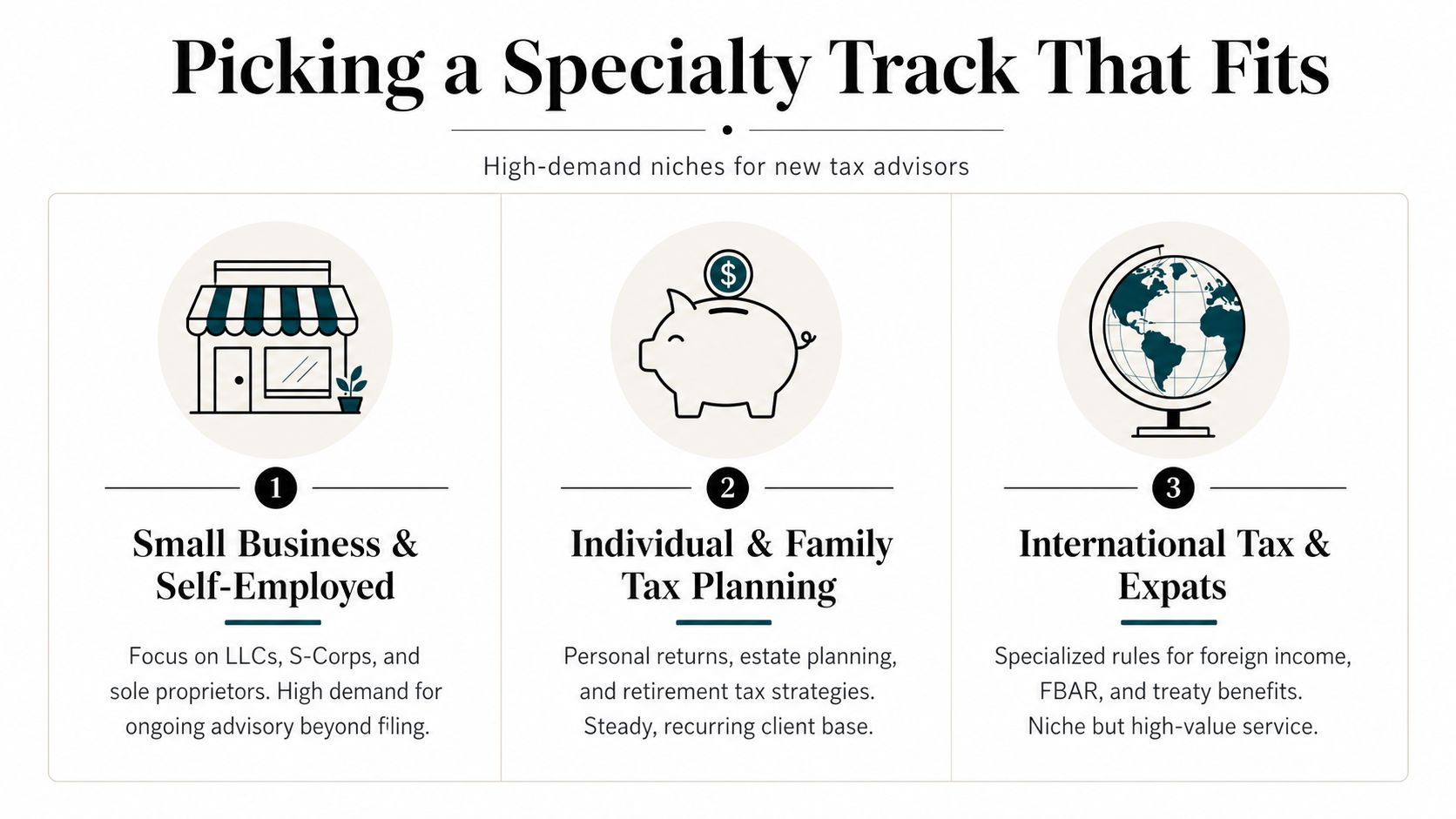
Generalists often struggle because clients can find a generic preparer almost anywhere. A specialty gives you a reason to be chosen, not just compared on price. The best niche is usually the one that matches both your temperament and the kind of questions you don't mind answering repeatedly.
Small business and startup advisory
This track fits people who like recurring client relationships and don't mind messy facts. LLCs, S corporations, payroll, estimated taxes, and owner compensation questions all sit here. The work is less about one return and more about staying involved as the client's business changes.
It's a strong lane for advisors who want year-round work. Owners don't just need filing help, they need someone who can keep them from making avoidable structural mistakes. If you like explaining trade-offs in plain English and you're patient with back-and-forth communication, this specialty can become the core of a practice.
Rental property and real estate taxation
Rental-property clients tend to ask different questions than small business owners. They want help with depreciation, expense classification, and documenting costs in a way that stands up later. Real estate work suits advisors who are detail-oriented and comfortable reviewing records carefully.
This niche can be especially sticky because property owners often return every year with the same house file, just updated with new repairs, financing, or acquisition details. If you're the type who likes structured records and practical planning, this is a natural fit.
Crypto and resolution work
Crypto clients usually need accuracy, patience, and a willingness to trace transactions that aren't neatly organized. That work can be demanding, but it's also one of the clearest examples of why tax advising goes beyond standard filing. Clients need someone who can translate a complicated digital history into a compliant tax result.
IRS resolution work is different again. That lane fits advisors who stay calm under pressure and can handle notices, audits, and back-tax issues without becoming reactive. It's not glamorous, but it can be one of the most valuable services you offer.
Studying for the Exams and Maintaining Your Credentials
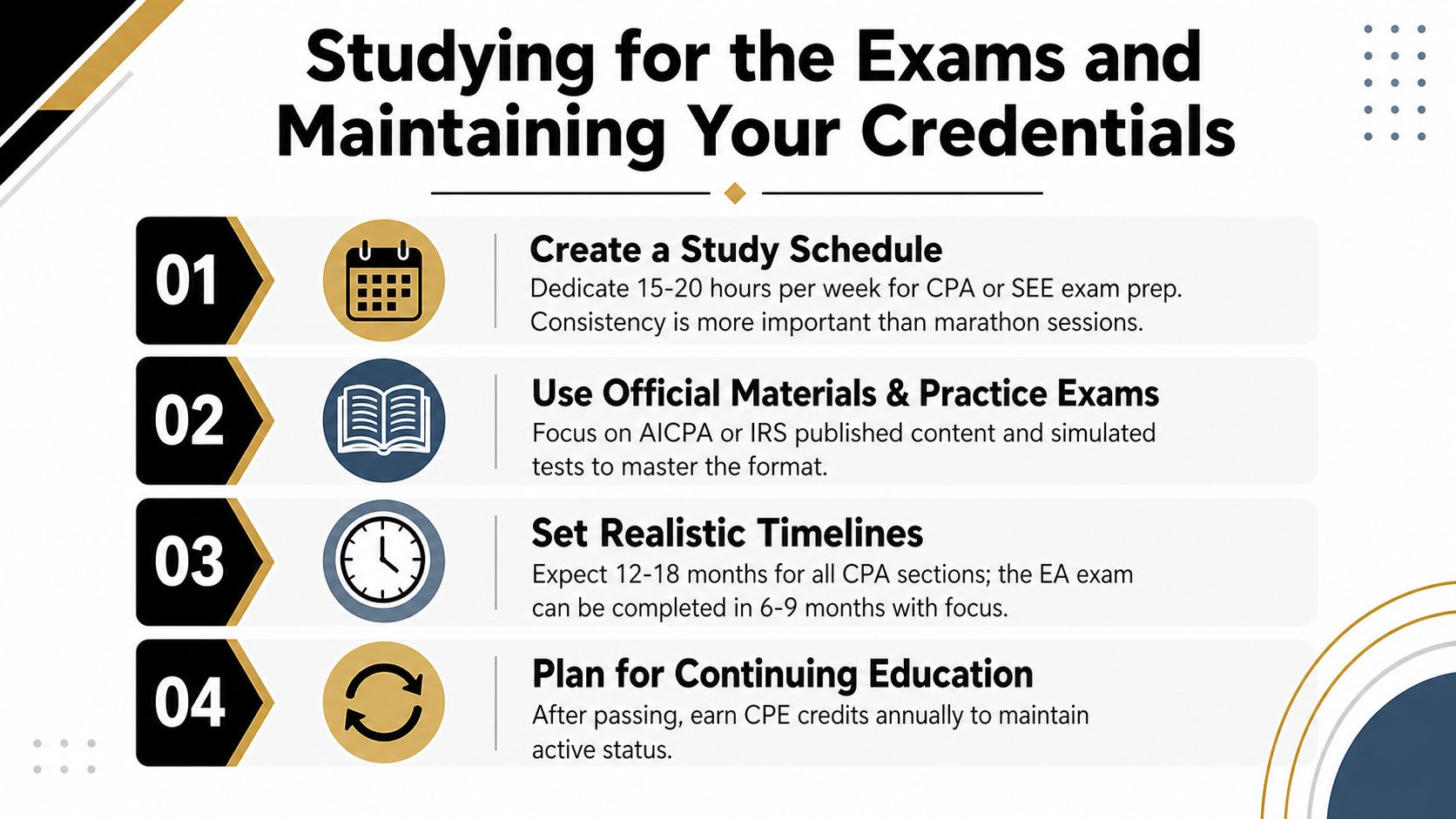
Passing the CPA exam or the SEE for EA status is less about raw intelligence than about consistency. People fail when they treat the exam like a one-week sprint instead of a structured campaign. The winning pattern is usually boring, steady, and repeatable.
What actually works in exam prep
Use a calendar and protect study blocks the same way you'd protect a client meeting. Focus on official materials and practice exams, because familiarity with the format matters as much as content knowledge. If you're already working in the field, your studying gets better when you connect questions to live client scenarios instead of memorizing them in isolation.
Practical rule: Study the way you'll work later, with checklists, repetition, and review.
Maintenance matters just as much as passing. CPAs and EAs both have continuing education obligations, and that ongoing learning is part of the job rather than an annoyance to dodge. The tax code changes frequently, and the profession now expects advisors to stay current on tax law, software, and increasingly digital workflows.
For people looking for a place to start the training search, tax preparer classes near me is the kind of query that works best when paired with a real plan, not just curiosity. You want classes that connect to the work you'll do, not generic lectures you'll forget by spring.
The career mindset behind the credential
This profession rewards people who keep learning after the exam is over. The same habits that get you through the CPA or EA path, reading carefully, checking details, and staying organized, are the habits that keep clients protected later. If you don't like continual learning, tax will feel like a trap. If you do, it becomes a durable career.
Your 1 to 5 Year Timeline and Launch Plan
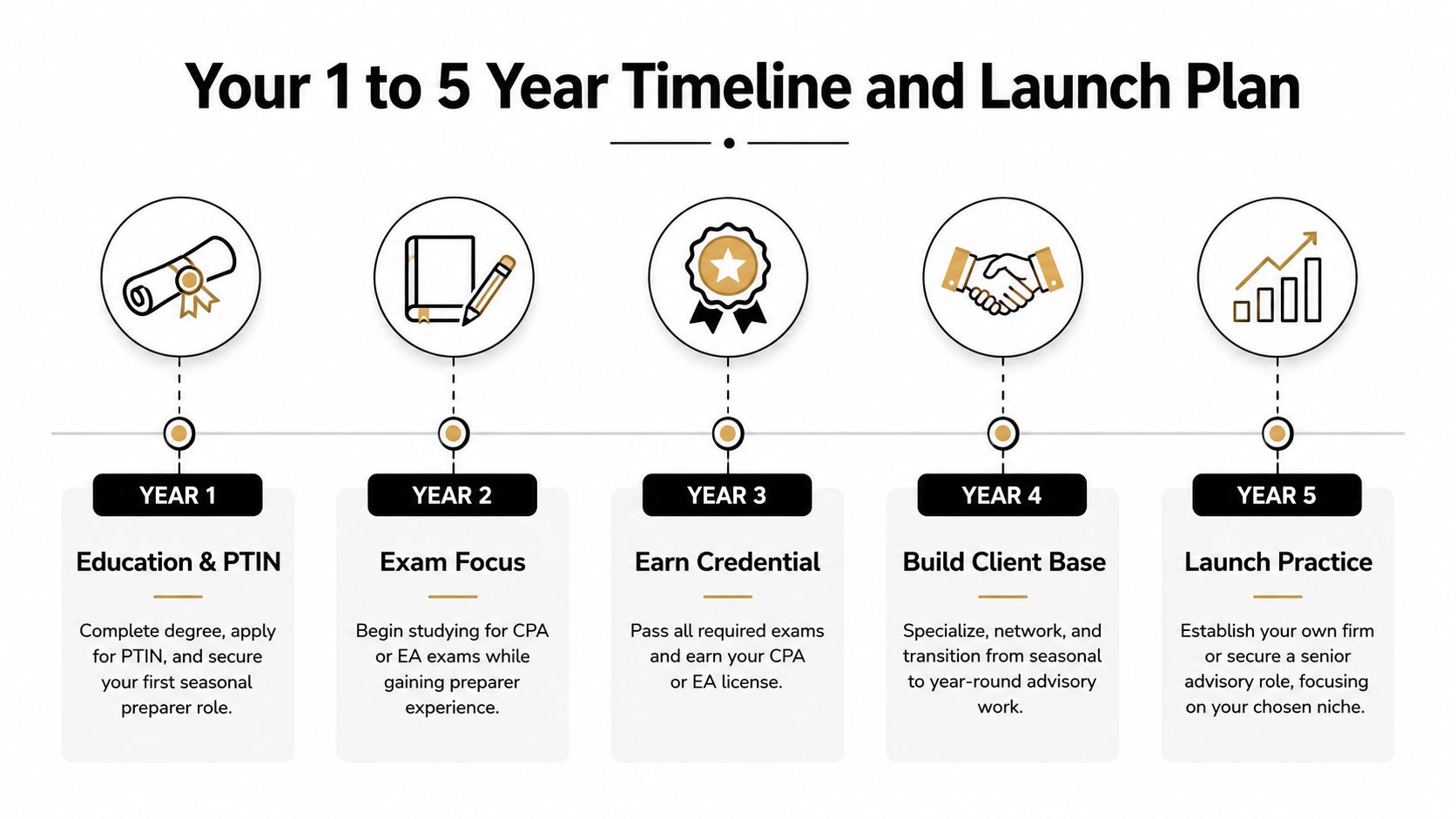
The cleanest path is phased, not rushed. Year one is about getting the educational base in place, registering for a PTIN, and seeing whether seasonal work suits you. Year two is when you should be deep in exam prep while still building hands-on experience.
A realistic five-year shape
By year three, the goal is to finish the credential path you chose and move into better client exposure. That's when internships, seasonal staffing, and junior advisory roles start paying off in a visible way. By year four, specialization should be clearer, whether that's small business, rentals, IRS resolution, or another niche that fits your temperament.
Year five is about making the most of your credentials. That might mean a senior firm role, a sharper advisory title, or a solo practice with a defined client base. The key isn't speed for its own sake, it's matching the credential to the outcome you want.
Turning credentials into work
Good applications still matter. Use a focused résumé, a direct career statement, and examples that show you understand the role you want rather than just the title. If you need help framing that language, career statement examples for 2026 can help you tighten the message before you apply.
Networking also matters more than people admit. State CPA society events, LinkedIn, and local professional groups often lead to the first serious opportunity. Once you get the role, practice-building basics matter too, especially clear pricing, a client portal, and a simple referral system that makes it easy for happy clients to send the right people your way.
The biggest mistake is treating tax advising like a one-exam profession. It isn't. It's a structured climb, and the advisors who last are the ones who pair credentials with judgment, specialty, and habits that make clients trust them year after year.
If you're serious about building a tax career that leads to real advisory work, Allied Tax Advisors can help you see what that path looks like in practice. They work with individuals, small businesses, rental-property owners, and taxpayers dealing with IRS issues, which makes them a strong place to learn how credentials turn into client results. Visit Allied Tax Advisors to explore services and get a clearer sense of the next step.