
If you're looking for a tax accountant for small business support, you're probably already feeling the pain. Your receipts are scattered across email and a glove box. Payroll is running, but you're not fully sure every withholding item is right. Quarterly taxes are coming up, and you're wondering whether you're paying too much, too little, or filing the wrong thing.
That's the moment most owners start shopping for "someone to do the taxes." I think that's too narrow. A return preparer can file forms. A real advisor helps you build a business that stays compliant, protects cash flow, and makes cleaner decisions all year.
That distinction matters because small-business tax work isn't a niche service. There are about 33.2 million small businesses in the United States, and they make up 99.9% of all U.S. businesses according to this accounting industry roundup. If you're a small business owner, you're operating in the middle of the economy, not on the fringe. You need financial support built for that reality.
Table of Contents
- Beyond Tax Season Why Your Business Needs a Strategic Partner
- Assessing Your True Accounting Needs
- How to Find and Vet Qualified Tax Professionals
- Critical Interview Questions for Your Accountant
- Decoding Service Models and Pricing Structures
- Your Onboarding Checklist for a Smooth Start
- Building a Year-Round Partnership for Growth
Beyond Tax Season Why Your Business Needs a Strategic Partner
Most owners wait too long. They hire an accountant when a deadline is close, the books are messy, or a notice shows up. That's reactive thinking, and reactive thinking gets expensive.
A tax accountant for small business work should do more than assemble a return. Their job is to create order. That means clean books, reliable reporting, controlled payroll, documented deductions, and a plan for tax payments before they become a surprise.
Small businesses don't just need filings. They need financial infrastructure. Industry guidance points out that accountants often support ongoing reporting, bookkeeping, payroll compliance, sales tax, property tax returns, and 1099 filings, and that their greatest value is often in preventing errors before they spread across the business, as explained in this piece on how accountants help businesses beyond tax time.
Practical rule: If your accountant only appears in March and April, you're not getting accounting leadership. You're getting form preparation.
The right relationship changes how you run the company. Instead of guessing what you can spend, you review real numbers. Instead of scrambling before filing deadlines, you maintain records throughout the year. Instead of treating taxes like an annual event, you manage them as part of operations.
That's how I want new clients to think about this decision. You are not hiring a vendor to "do taxes." You are choosing who gets visibility into your cash flow, your payroll process, your entity structure, and your risk points. Pick someone who can help lead those conversations.
Assessing Your True Accounting Needs
A common mistake is to say you need tax prep when the actual need is bookkeeping discipline, payroll control, or monthly reporting you can trust. If you define the problem badly, you hire for the wrong job and pay for the wrong fix.
Start with what keeps landing back on your desk.
If bank accounts are unreconciled, receipts are scattered, payroll entries look inconsistent, or financial statements arrive late, your first need is not advanced tax planning. Your first need is operating discipline. Strategy sits on top of clean numbers. It does not replace them.
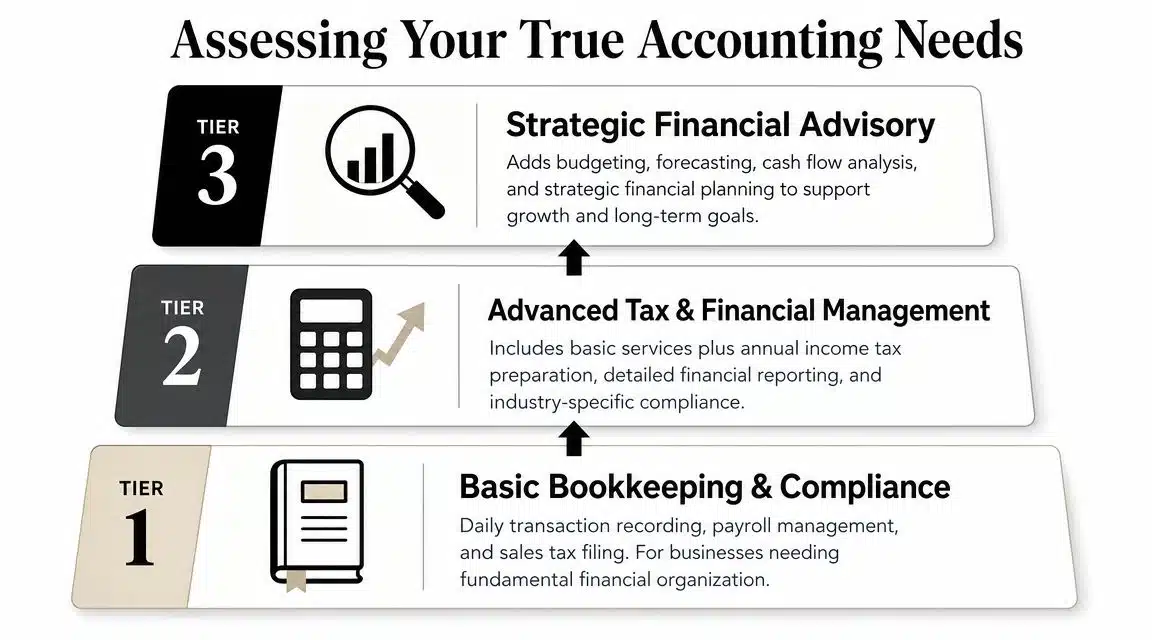
Break the work into three levels.
Bookkeeping and compliance
You need transaction coding, reconciliations, payroll processing support, sales tax handling, and records that hold up under review.Tax preparation and financial review
You need business returns, accurate year-end numbers, and someone who checks whether the books support what gets filed.Advisory and planning
You need cash flow forecasting, budgeting, entity structure guidance, estimated tax planning, and support for financing, hiring, or expansion decisions.
These are separate jobs. Some firms do all three well. Many do one or two. Your job is to decide which level your business needs right now.
Here is the rule I give new clients. If you cannot trust your monthly numbers, do not shop for clever tax ideas yet. Fix the accounting foundation first.
Your stage of business matters too. A newer company usually needs setup and habits. A growing company needs consistency and controls. A more established company needs interpretation, planning, and someone who can connect the numbers to decisions about margin, hiring, debt, and owner compensation.
Write down your needs in plain language before you contact anyone.
List recurring obligations
Include bookkeeping, payroll, sales tax, contractor payments, monthly closes, estimated taxes, and year-end filings.List the problems that repeat
Late reports, surprise tax balances, messy cleanup work, cash shortages, or uncertainty about what you can afford are all signals.Separate compliance work from decision support
Filing returns is compliance. Forecasting cash, planning compensation, and preparing for financing are decision support.Decide whether you need a specialist or an ongoing advisor
If the need is narrow, hire narrowly. If the business is growing and the financial side feels reactive, get year-round support.
That last point matters more than many owners admit. The right tax accountant for small business work should help you run the company with better timing and better information, not just file forms after the year is over. If you are dealing with uneven cash flow, planning a hire, or trying to qualify for financing, you need an accountant who can interpret the numbers and help you act on them.
If you want a benchmark for screening that kind of advisor, use this Allied guide on how to find a good CPA for your business. If you are building a shortlist of credentialed professionals, Hire CPAs is a practical place to start.
Write the scope before you make the calls. A short written list of needs leads to better interviews, better pricing conversations, and a better long-term fit.
How to Find and Vet Qualified Tax Professionals
You hire a tax accountant. Twelve months later, you still get late answers, you still do cleanup work yourself, and you still make cash decisions without good numbers. That is a bad hire, even if the return gets filed on time.
Treat this search like you would any other senior business hire. You are not buying a form preparer. You are choosing a financial partner who should protect cash flow, spot tax issues early, and help you make cleaner decisions during the year.
Where to build your shortlist
Start where credibility is already being tested in practice.
Ask your business attorney who they trust with business entities like yours. Ask your banker who sends organized financials and responds quickly during lending reviews. Ask an owner with a similar size, model, and margin profile who they use, and why. Those conversations usually tell you more than a polished website ever will.
If you need to widen the field, use filtered directories instead of general search results. If you're specifically comparing credentialed professionals, Hire CPAs is a practical directory because it narrows the field to CPA candidates rather than broad, mixed-profile listings.
For a tighter screening framework, use this Allied Tax guide on how to find a good CPA for your business. It gives you a practical standard for comparing candidates before you spend time on calls.
What to verify before you schedule a call
Do the first screen by email or through the firm's intake form. Save live conversations for firms that clear the basics.
Check these points first:
License and filing authority
Confirm they are a CPA or EA in good standing and authorized to represent clients where that applies.Business return experience
Ask what share of their client base is made up of small businesses, not individuals with a side activity.Entity-specific experience
An accountant who handles S corporations every week is more useful to an S corporation owner than a generalist who sees one occasionally.Industry exposure
Contractors, agencies, ecommerce sellers, landlords, and medical practices create different tax risks and reporting demands. Relevant exposure shortens the learning curve.Service range
Confirm whether they only prepare returns or also handle notice response, year-round planning, owner compensation, sales tax, 1099s, and bookkeeping review.Technology fit
Make sure they can work with your accounting system, payroll platform, and document portal without creating unnecessary friction.Responsiveness and process
Ask who answers questions, how long replies usually take, and what their workflow looks like during busy periods.
This screen should shrink the list fast.
A qualified tax professional for a small business should be able to explain how work moves through their firm, what they review during the year, and where they usually catch problems. If those answers are vague, keep looking. Credentials matter. Process matters more.
Keep the shortlist to three to five firms. That gives you enough range to compare judgment, communication, and fit without turning the search into a research project that drags on for weeks.
Critical Interview Questions for Your Accountant
A weak interview sounds like this: What do you charge, how long have you been in business, and can you handle my return? That tells you almost nothing.
A better interview reveals whether the person can think ahead, communicate clearly, and keep your business on schedule when deadlines stack up. That matters because small-business tax work is full of moving dates and low owner confidence. A QuickBooks survey found that only 48% of small business owners are confident they are paying taxes correctly, and the same overview notes common federal estimated-tax due dates of April 15, June 15, September 15, and January 15, along with different filing dates by entity type, in this summary of small business tax deadline complexity.
Questions that expose whether they think ahead
Ask questions that force the candidate to describe a system, not just a service.
How do you handle tax planning during the year, not just at filing time?
You want to hear about review cadence, projection updates, document requests, and estimated tax management.How do you keep clients aware of deadlines and required filings?
A strong answer includes reminders, calendars, responsibility assignments, and follow-up, not "we'll let you know if something comes up."What do you review before preparing a business return?
Listen for discussion of bookkeeping quality, reconciliations, payroll, owner distributions, contractor reporting, and financial statements.How do you respond when the books are incomplete or wrong?
You want a method. Cleanup process, questions, deadlines, and what has to be fixed before filing.
If they talk only about forms, they think like a preparer. If they talk about workflow, they think like an advisor.
Questions that test process and fit
The second group of questions tells you what working together will feel like.
Ask these directly:
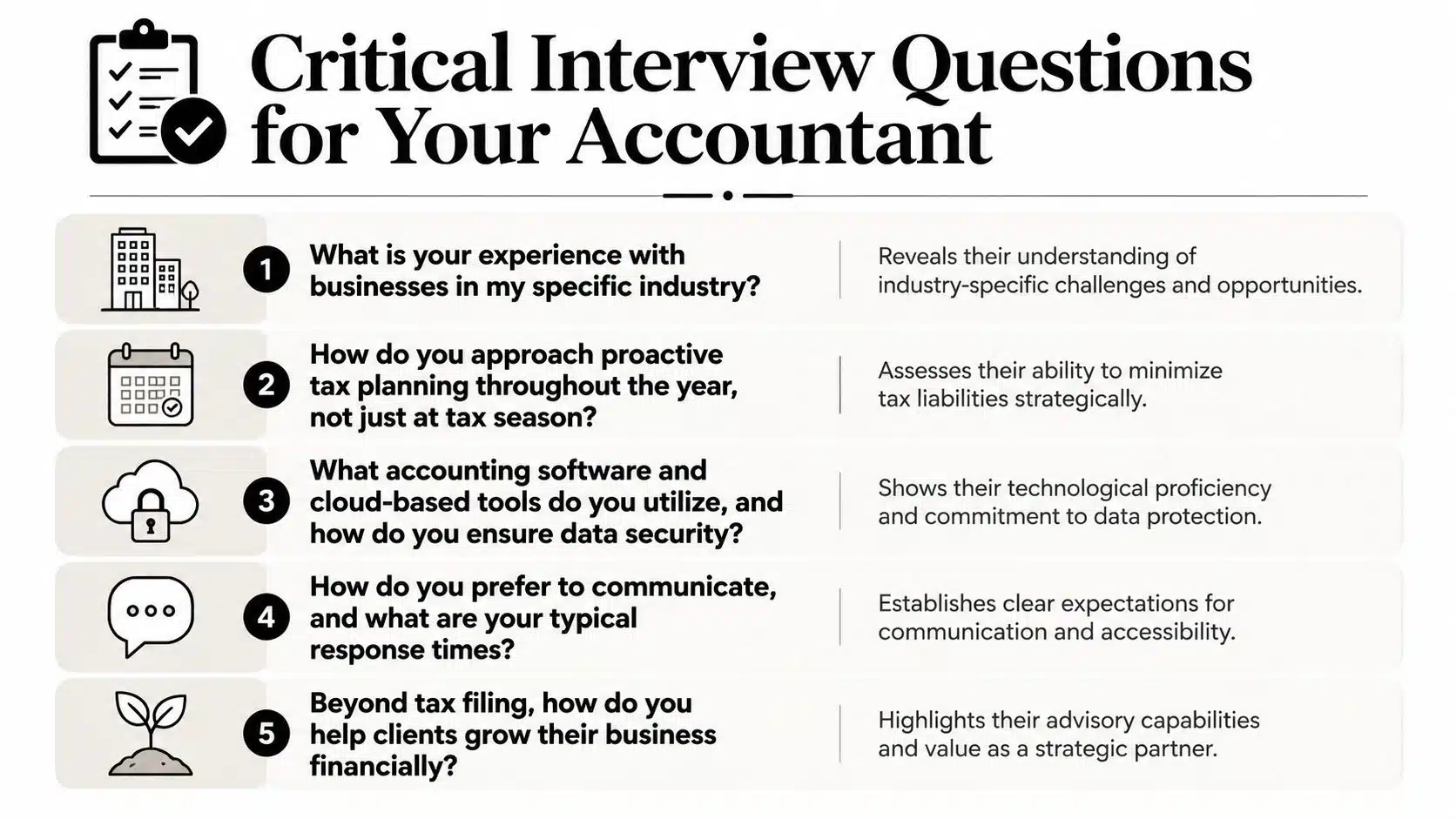
What experience do you have with businesses in my industry?
Industry exposure can shorten the learning curve and improve judgment.Which accounting and payroll tools do you use regularly?
Software fluency matters because friction in the tech stack turns into delays and bad data.Who will do the work?
You need clarity on whether you're hiring the person in the meeting or a layered team.How do clients contact you, and what does communication look like during busy periods?
You don't need promises of instant replies. You need a predictable process.How do you help clients beyond filing returns?
This question cuts to the heart of the relationship. It shows whether they can support cash flow, reporting, and decision-making.
A few answers should make you cautious. Vague talk about "saving you money" without asking for facts. No clear explanation of document handling. No mention of reconciliations or bookkeeping quality. Overconfidence about fixing everything later.
The best interview usually feels calm, structured, and specific. They ask about your business model. They ask how you currently handle payroll and bookkeeping. They ask where things break. That's the person trying to understand the business, not just win the engagement.
Decoding Service Models and Pricing Structures
Price gets too much attention too early. Start with the service model, because the billing structure shapes how often you talk, what work gets done during the year, and whether your accountant acts like a strategic partner or a year-end form preparer.
The wrong model creates bad behavior. Owners stop asking questions because every email feels billable. Accountants stay reactive because the engagement only covers a return. Problems sit untouched until filing season, when your options are narrower and the fix is more expensive.
Why the pricing model changes the outcome
Small business tax work usually falls into three structures.
Hourly billing fits messy books, tax notices, and cleanup work where nobody can define the scope up front. It has a place. It also trains clients to stay quiet, which is a poor setup if you need advice on owner pay, estimated taxes, or timing major purchases.
Flat-fee project pricing works for clearly defined work such as an annual return, an entity setup, or a bookkeeping catch-up project. It gives you a clean quote and a clear endpoint. It rarely gives you consistent oversight, which means planning often disappears once the project ends.
Retainer pricing is the strongest model for a business that wants real support during the year. That usually includes bookkeeping review, tax planning, filing coordination, payroll touchpoints, and periodic financial discussions. This is the model that turns an accountant into part of your operating rhythm.
That distinction matters because a strong accounting relationship should help you manage cash flow, budgeting, and financing readiness, not just file forms on time. If your books are still inconsistent, fix that first with a clean system and disciplined monthly close. Our guide on setting up QuickBooks for a small business is a practical place to start.
Service model also affects responsiveness. A firm that cannot handle basic client communication usually struggles elsewhere too. Some firms use answering support to prevent lost accounting leads, which tells you something useful. Process matters. If intake is disorganized, ongoing service often is too.
Comparing Accountant Pricing Models
| Pricing Model | Best For | Pros | Cons |
|---|---|---|---|
| Hourly billing | Cleanup projects, irregular consulting, unclear scope | Flexible, useful for one-off issues, straightforward when work is unpredictable | Hard to budget, can discourage communication, scope can drift |
| Fixed-fee project | Annual returns, entity setup support, defined engagements | Clear price, clear deliverable, easy to compare proposals | Limited ongoing support, less room for proactive planning |
| Monthly or quarterly retainer | Businesses needing recurring bookkeeping, tax planning, payroll coordination, advisory | Predictable cost, encourages regular communication, supports strategic partnership | Requires commitment, scope must be defined well |
Here is the practical answer.
Use fixed-fee pricing if your books are clean and you only need a return or a defined project. Use hourly pricing for cleanup, notices, or any situation where the work is still being diagnosed. Use a retainer if you want an accountant who helps you make better decisions before they become tax problems.
Retainers cost more on paper. They often cost less in practice. You get regular review, earlier corrections, better tax timing, and fewer surprises. That is how small businesses protect cash flow and make cleaner decisions over time.
Your Onboarding Checklist for a Smooth Start
A good hire can still fail if onboarding is sloppy. Most frustrations in accounting relationships start in the first few weeks, when nobody has clear records, access, or communication rules.
Get organized before the first major deadline hits.
Get the documents together first
Don't wait for your accountant to chase basic records. Prepare the file set early.
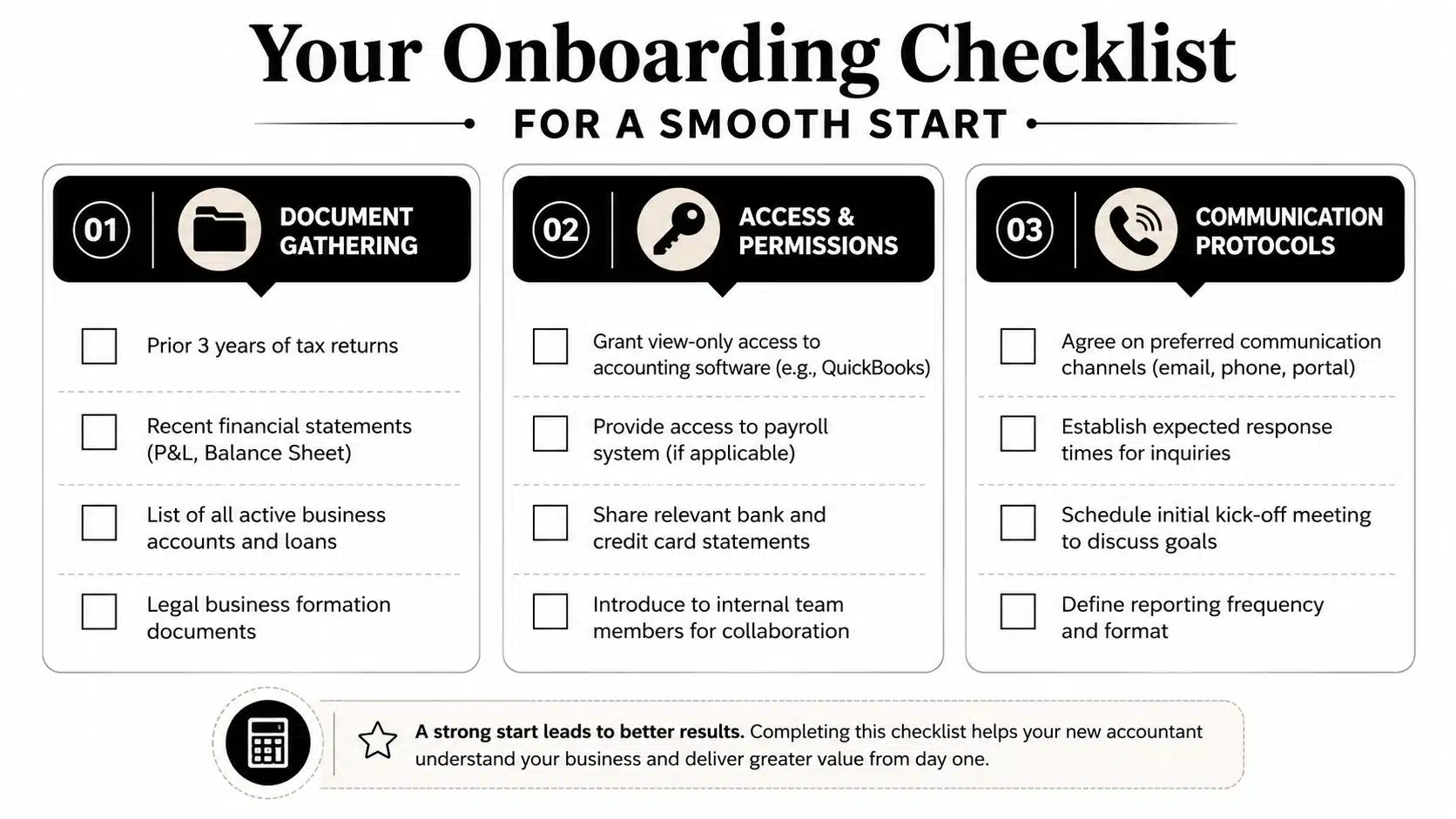
Gather these items:
Prior tax returns
Include business returns and relevant owner returns when business activity flows through.Recent financial statements
Provide your profit and loss statement, balance sheet, and any internal reporting you already use.Entity and registration documents
Formation records, EIN information, and any state registrations should be easy to access.Banking and loan details
Share the list of active business accounts, credit cards, and debt obligations.Payroll and contractor records
If you run payroll or issue contractor payments, include current setup information and prior filings.
Clean onboarding shortens the path to useful advice. Messy onboarding turns the first month into a scavenger hunt.
Set up systems and operating rules
After documents, fix access and process. It is at this stage that many small businesses either gain control or continue operating in confusion.
A strong accounting control stack starts with a dedicated business bank account, transaction categorization, and regular reconciliations on a weekly or monthly cadence, because the most common breakdown is mixing personal and business activity or delaying reconciliations until year-end, according to this practical bookkeeping guide from Wave.
Use that standard during onboarding:
Separate accounts completely
If personal and business transactions are mixed, address that immediately.Grant the right software access
Give secure, appropriate access to your accounting platform, payroll system, and document portal.Confirm the bookkeeping workflow
Decide who codes transactions, who reviews them, and how often reconciliations happen.Set a communication rhythm
Pick the main contact, preferred channel, and expected response window.Standardize the system early
If you're using QuickBooks or planning to clean it up, this guide on how to set up QuickBooks is a practical reference for getting the foundation right.
One more point. If you want a single provider to handle several of these moving parts, firms such as Allied Tax Advisors offer combinations of bookkeeping, payroll processing, sales-tax support, QuickBooks bookkeeping, and business tax filings. That's useful when you want fewer handoffs between providers.
The onboarding meeting should end with shared expectations. What gets delivered monthly. What gets reviewed quarterly. What the owner must provide. What the accountant owns. Ambiguity is where deadlines go to die.
Building a Year-Round Partnership for Growth
The strongest accountant relationship doesn't peak in April. It compounds through the year.
If you want the business to run better, your accountant needs current books, current documentation, and scheduled conversations about what the numbers mean. Waiting until year-end leaves too much to fix, too late.
Run the relationship on a quarterly cadence
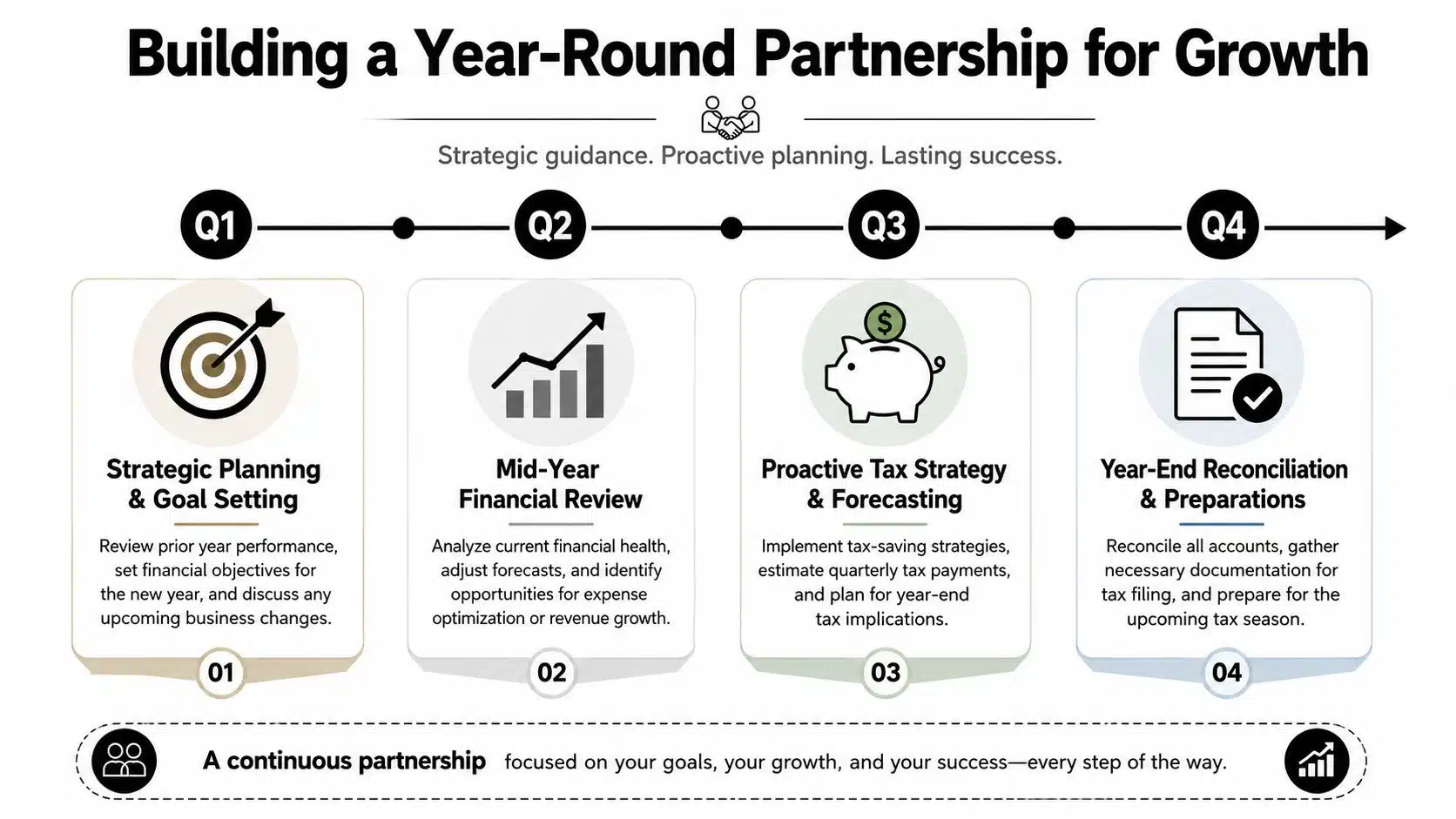
A practical tax workflow for a small business is pay-as-you-go. That means estimating annual taxable profit, dividing expected tax into quarterly installments, and reconciling those estimates against the annual return. Common federal estimated payment dates are April 15, June 15, September 15, and January 15 of the following year, and this process works best when source documents are maintained all year, as described in this guide to small business tax workflow and documentation.
That framework should shape your meeting schedule.
Use quarterly reviews to cover:
Tax projection updates
If profit changed, estimated payments may need to change too.Financial statement review
Look at trends in revenue, expenses, liquidity, and any unusual transactions.Documentation gaps
Catch missing receipts, asset purchases, mileage logs, or home-office records while they're still recoverable.Upcoming operational decisions
Hiring, financing, equipment purchases, distributions, and structure changes all affect taxes and cash flow.
Use your accountant as an operator not a historian
Most bad accounting relationships are historical. The accountant tells you what happened after the year is over. That's useful, but it's not enough.
A stronger relationship is operational. The accountant helps you keep the books current, checks whether payroll and filings are staying aligned, reviews the tax impact of decisions before you make them, and steps in quickly if a notice or audit issue appears.
That doesn't mean your accountant runs the business. It means they help you run the financial side with fewer blind spots.
Every small business owner should ask for the following from a year-round tax accountant for small business support:
A defined quarterly review process
Not optional. Scheduled.A monthly bookkeeping standard
Books should not drift until year-end.A clear documentation policy
Save records as you go, not after the fact.Decision support before major moves
Ask before you hire, borrow, distribute, or change structure.Tax planning built into operations
Use a proactive framework such as tax planning for small businesses when major decisions affect future liability.
The annual return should be the byproduct of good systems. It should not be the moment when your accountant first understands your business.
That's the proper standard. The filing should feel like reconciliation, not rescue. When that happens, taxes become manageable, cash flow becomes more predictable, and you stop making avoidable decisions in the dark.
If you're ready to stop treating accounting like a year-end scramble, talk with Allied Tax Advisors. We help small businesses build the bookkeeping, payroll, tax planning, and compliance systems that support cleaner decisions all year.